 Funky Millions
Best Eyeliner Styles for Different Eye Shapes
Discover the best eyeliner styles for your specific eye shape, from hooded to almond to monolid, with step-by-step application tips.
Quick summary
Key Takeaways
- Eyeliner technique should be matched to your specific eye shape for genuinely flattering results, since the same style can read very differently across different eye shapes.
- Most eyes combine multiple shape characteristics rather than fitting neatly into one category, and blending relevant technique advice from each applicable category produces more accurate, personalized results than following a single shape's guidance alone.
- Liquid and felt-tip formulas suit the precision hooded eyes need, gel liner's blendability suits monolid eyes wanting both definition and softness, and pencil's buildable nature suits close-set eyes needing graduated intensity across the lid.
- Increasing hooding and reduced skin elasticity are natural age-related changes that often warrant revisiting eyeliner technique and formula choice, even for those who did not previously identify as having hooded eyes.
The same eyeliner technique that beautifully opens up one eye shape can make another look smaller or heavier, since eye shape significantly affects how liner reads visually. Understanding which eyeliner styles genuinely flatter your specific eye shape, rather than following a generic tutorial not designed for your eyes, can make a meaningful difference in your overall makeup results.
Why Eye Shape Matters for Eyeliner
Eyeliner placement and style interact directly with your eye's natural shape, either working with its proportions to enhance and open up the eye, or working against them in ways that can make the eye look smaller, heavier, or less lifted than intended. Understanding your eye shape allows you to choose techniques specifically suited to your proportions rather than applying a one-size-fits-all approach.
Identifying Your Eye Shape
- Hooded: The crease is partially or fully hidden by a fold of skin, especially visible with eyes open
- Almond: Eyes are wider at the center, tapering at both corners, generally considered a versatile, balanced shape
- Monolid: Minimal to no visible crease, with a flatter lid surface
- Round: Eyes appear more circular, with more visible white space above and below the iris
- Downturned: Outer corners angle slightly downward relative to the inner corners
- Close-set: Less space between the inner corners of the eyes relative to eye width
Most people have a combination of characteristics rather than a single "pure" eye shape, so identify the traits most relevant to your eyes.
Combining Eye Shape Characteristics
While the eye shapes above are described individually, most people's eyes actually combine two or more characteristics simultaneously, which is an important nuance easy to miss when reading eye shape guides that present each category as entirely distinct and mutually exclusive.
Hooded and downturned characteristics frequently occur together, requiring a technique that addresses both the crease coverage concern of hooded eyes and the lift concern of downturned eyes simultaneously, generally achieved by combining a thin, precise line with a more dramatically upward-angled wing than either characteristic alone would suggest. Similarly, monolid and close-set characteristics can combine, calling for a technique that provides the definition monolid eyes benefit from while also directing intensity toward the outer corners to address the close-set concern.
Rather than trying to force your eyes into a single category, identifying which two or three characteristics most apply to your specific eyes and blending the relevant technique recommendations for each tends to produce better, more personalized results than rigidly following advice for only one shape category.
Eyeliner for Hooded Eyes
For hooded eyes, avoid applying liner in a way that becomes fully hidden once the eye is open, since a thick line at the lash line can disappear under the hood, or worse, transfer onto the hood itself throughout the day.
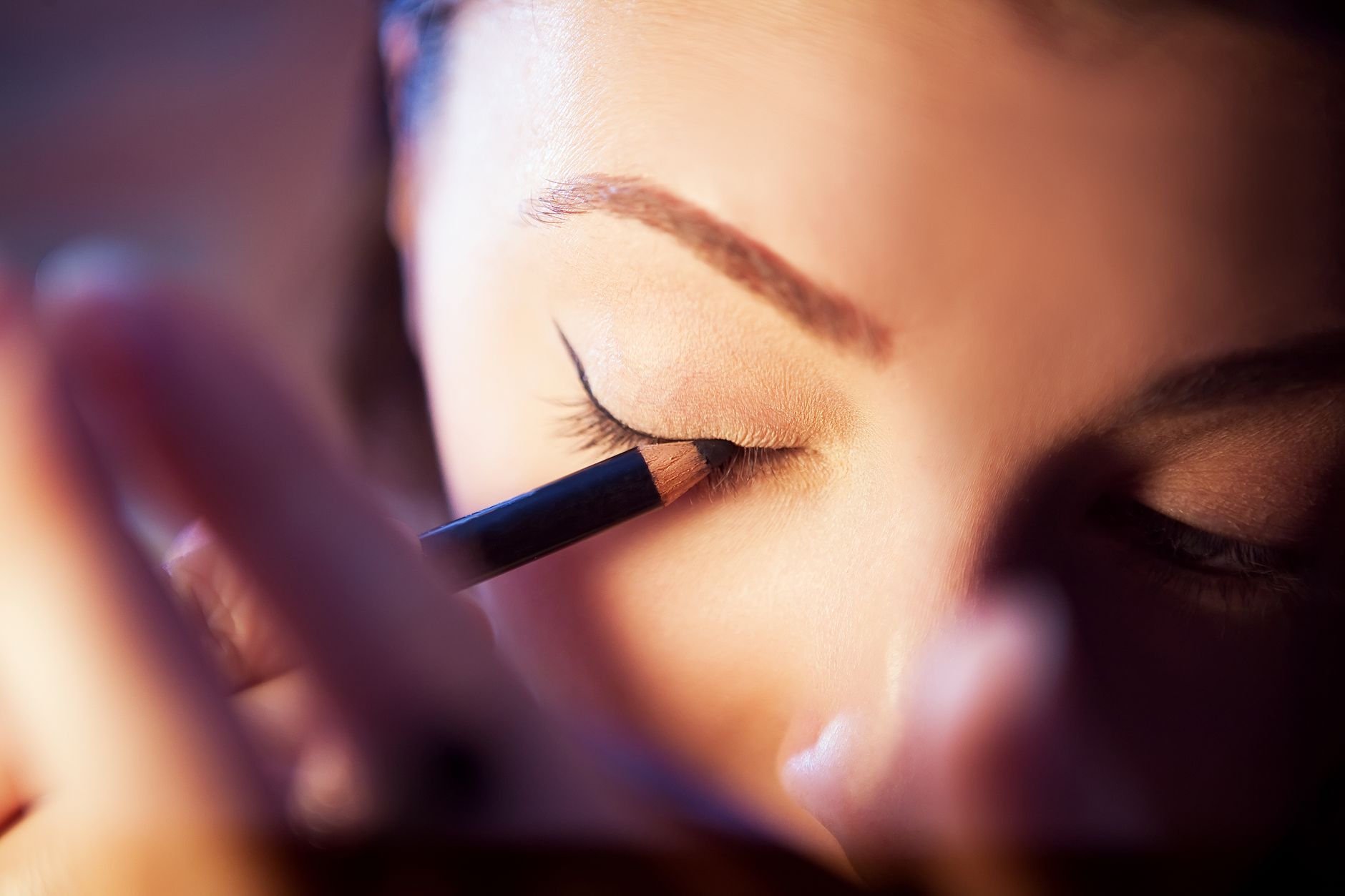
Recommended technique: A thin line at the lash line that tapers into a subtle, slightly lifted wing extending past the outer corner, avoiding excessive thickness that will settle into the crease.
Eyeliner for Almond Eyes
Almond eyes are often considered the most versatile shape for eyeliner, generally able to handle a wide range of styles well.
Recommended technique: Almost any style works, from a classic winged liner to a smudged, smoky look, since almond eyes' natural proportions accommodate most techniques without significant adjustment needed.
Eyeliner for Monolid Eyes
For monolid eyes, liner is often more visible overall since there is no crease to partially obscure it, making precision particularly important.
Recommended technique: A slightly thicker line, tapering into a wing that follows the natural lower lash line angle, and using a matte pencil to gently smudge along the lower lash line for added dimension. Winged liner tends to look particularly striking on monolids, since the flatter lid surface provides a clean, uninterrupted canvas for the wing.
Eyeliner for Round Eyes
For round eyes, the goal is often to elongate and create a more almond-like appearance.
Recommended technique: Extend liner slightly past the outer corner in a horizontal, elongating line rather than a dramatic upward wing, which can emphasize roundness rather than elongating the eye shape.
Eyeliner for Downturned Eyes
For downturned eyes, the goal is typically to create a subtle lift at the outer corner.
Recommended technique: A winged liner that angles upward more dramatically than a standard wing, starting the wing slightly before the natural outer corner to counteract the downward angle and create visual lift.
Eyeliner for Close-Set Eyes
For close-set eyes, the goal is often to visually widen the space between the eyes.
Recommended technique: Focus liner intensity toward the outer corners rather than the inner corners, keeping the inner corner area lighter or liner-free to avoid visually closing the gap between the eyes further.
Comparison Table: Eyeliner Styles by Eye Shape
| Eye Shape | Recommended Style | Avoid |
|---|---|---|
| Hooded | Thin line, subtle lift | Thick line that disappears under the hood |
| Almond | Most styles work well | N/A, generally versatile |
| Monolid | Slightly thicker, defined wing | Overly thin lines that lose visibility |
| Round | Horizontal elongating line | Dramatic upward wings that emphasize roundness |
| Downturned | Dramatic upward wing for lift | Wings that follow the natural downward angle |
| Close-set | Intensity toward outer corners | Heavy inner corner application |
Eyeliner Formula Choice and Eye Shape
Beyond technique and placement, the actual eyeliner formula, pencil, gel, liquid, or felt-tip, interacts with eye shape in ways worth considering, since certain formulas make specific techniques considerably easier or harder to execute well depending on your eye's particular structure.
For hooded eyes, liquid or felt-tip liners tend to offer more precision and control than pencil formulas, which is particularly valuable given how important it is to keep lines thin and avoid product settling into the hood's crease. The crisp, controlled line liquid formulas provide makes it easier to create the subtle, precise application hooded eyes generally require, whereas softer pencil formulas can be harder to keep thin and clean in this context.
For monolid eyes, gel liner applied with an angled brush often provides the ideal balance of precision and blendability, allowing for both a crisp wing and the ability to softly smudge along the lower lash line for added dimension, a combination that liquid liner's typically harder edge does not achieve as easily. For close-set eyes, where the technique specifically calls for varying intensity across the lid (lighter at the inner corner, more intense at the outer corner), a pencil formula's inherent buildability, allowing for easy layering and softening in specific zones, can make achieving this graduated effect more straightforward than a liquid formula's more uniform, all-or-nothing application.
Common Mistakes to Avoid
Applying the Same Technique Regardless of Eye Shape
Following a tutorial designed for a different eye shape than your own often produces results that do not translate as intended, since the underlying proportions are different.
Overcomplicating Hooded Eye Application
Thick, elaborate liner styles are more likely to smudge or become hidden under the hood on hooded eyes, making simpler, thinner techniques generally more reliable and long-lasting.
Ignoring the Lower Lash Line
For several eye shapes, particularly monolid and close-set eyes, thoughtful lower lash line application (or intentional avoidance) plays as much of a role in the overall effect as upper lid liner.
Applying Liner Too Close to the Inner Corner on Close-Set Eyes
This can visually emphasize closeness between the eyes rather than creating the widening effect most people with close-set eyes are aiming for.
Adjusting Eyeliner as Eyes Change With Age
Eye shape is not entirely fixed throughout life, and understanding how eyelid skin naturally changes with age helps explain why an eyeliner technique that worked beautifully for years can suddenly feel like it no longer suits your eyes in quite the same way, prompting a worthwhile technique reassessment rather than assuming something is being done wrong.
As skin naturally loses some elasticity over time, many people develop increased hooding, even those who did not have particularly hooded eyes in their younger years, as the eyelid skin gradually begins to fold and cover more of the lid space. This means techniques that worked well for an almond or round eye shape in earlier decades may need to shift toward the thinner, more lifted approach generally recommended for hooded eyes, discussed earlier in this guide, as this natural change occurs.
Additionally, the skin's reduced elasticity can make liquid liner application more challenging, since a smooth, taut canvas makes for easier, more controlled lines, while looser skin can make achieving a crisp, symmetrical wing more difficult than it once was. Some people find that switching to a slightly softer pencil or gel formula, combined with gently pulling the lid taut with one hand while applying with the other, helps maintain precision despite these natural textural changes.
- Apply liner with your eyes open periodically during application to check how the line actually appears in your natural, open-eye position, particularly important for hooded eyes.
- Use a mirror that allows you to see your eyes at a slight downward angle, mimicking how others typically see your eyes, rather than only checking straight-on in a mirror.
- Practice on one eye at a time, perfecting a technique before replicating it, rather than trying to do both eyes simultaneously while still learning a new style.
- Consider your eye shape alongside your desired look, since some dramatic styles may need modification to work well with certain eye shapes.
Conclusion
Understanding your eye shape and choosing eyeliner techniques specifically suited to its proportions, rather than following generic tutorials, makes a meaningful difference in how flattering and long-lasting your eyeliner application looks. Whether you have hooded, almond, monolid, round, downturned, or close-set eyes, matching your technique to your natural shape allows eyeliner to enhance rather than work against your eyes' unique proportions.
For more on building a complete eye makeup look, see our guide on eyeshadow for beginners.
Category: Makeup
Tags: eyeliner styles, eye shapes, hooded eyes, monolid eyes, almond eyes, winged eyeliner, eye makeup, makeup techniques, eyeliner application, beauty basics
Frequently Asked Questions
References
Last updated
This article is for informational purposes only and does not constitute medical advice. Consult a licensed dermatologist or healthcare provider before starting any new treatment.
Beauty & Hair Care Editor
Amanda Gurton is a beauty editor and researcher with a focus on translating dermatology and trichology insights into clear, actionable advice. She covers skincare routines, hair health, ingredient science, and everyday beauty habits.
Comments (0)
Be the first to comment.
Related Articles
Makeup Tips for Glasses Wearers
Learn makeup techniques specifically for glasses wearers, from eyeshadow adjustments to brow shaping, for a look that works with your frames.
Color Correcting 101: Which Shade Cancels What
Learn how color correcting works, which shade neutralizes which skin concern, and how to apply color correctors correctly for flawless coverage.

How to Patch Test Beauty Products Safely
Learn how to properly patch test makeup, hair products, and other beauty items beyond skincare, and how to interpret the results.
Minimalist Makeup Bag: 10 Essentials You Actually Need
Discover the 10 genuine makeup essentials for a minimalist routine, cutting through excess products to focus on what actually matters.