 Funky Millions
How to Properly Store Makeup and Beauty Tools for Longevity
Learn how to properly store makeup and beauty tools to extend their lifespan, maintain hygiene, and preserve product effectiveness.
Quick summary
Key Takeaways
- Storage practices affect both product effectiveness and tool longevity, alongside genuine hygiene considerations that protect skin health.
- Cool, stable temperatures and protection from direct light help preserve liquid and cream product consistency and effectiveness.
- Brushes should be stored bristles-up in a well-ventilated holder, only after being fully dried following cleaning.
- Proper beauty sponge storage prioritizes ventilation and drying, given how prone these porous tools are to bacterial growth if stored incorrectly.
- Writing opening dates on products and organizing storage in a way that keeps items visible rather than buried supports more consistent expiration tracking, helping you replace products before they degrade to the point of reduced effectiveness or potential skin irritation.
- Travel storage requires extra attention to leak prevention and ensuring tools are fully dry before packing in enclosed cases.
- Bathroom storage offers convenience but creates humidity-related risks for product longevity, making it worth considering a hybrid approach that keeps only actively used products in the bathroom while storing backups and infrequently used items in a drier location.
- Smaller collections generally need only simple, single-location storage focused on basic principles, while larger collections benefit from dedicated storage furniture and a rotation system separating frequently used products from occasional-use items.
How you store makeup and beauty tools significantly affects both their longevity and hygiene, yet storage often gets far less attention than application technique or product selection. This guide covers proper storage practices for different product and tool categories, helping you protect your investment and maintain better hygiene throughout your routine.
Why Storage Matters
Proper storage protects products from degradation due to light, heat, and air exposure, while also maintaining the hygiene standards necessary to prevent bacterial growth that can lead to skin irritation or infection. Tools stored incorrectly can also deteriorate faster, shedding bristles or losing their shape prematurely.
Storing Liquid and Cream Products
Store liquid and cream products (foundation, concealer, cream blush) upright when possible, in a cool, dry location away from direct sunlight. Extreme temperature fluctuations, such as leaving products in a hot car, can accelerate degradation and separation of these formulas.
Storing Powder Products
Powder products (eyeshadow, powder foundation, blush) are generally more stable than liquid or cream formulas but still benefit from being kept dry and protected from humidity, which can cause clumping or bacterial growth over time. Ensure compacts are fully closed after each use to minimize air and moisture exposure.
Storing Brushes and Applicators
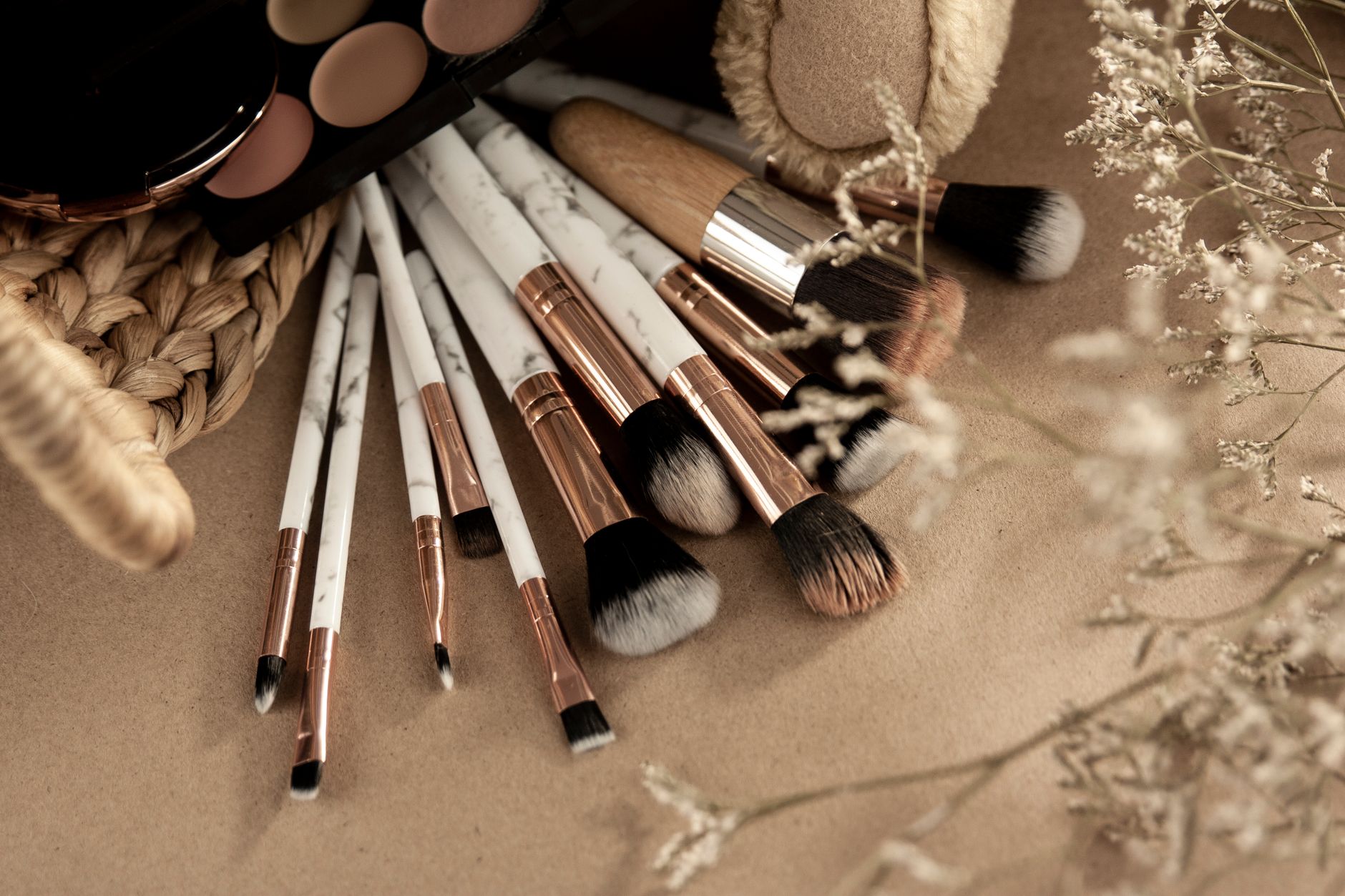
Store clean, dry brushes upright in a cup or holder, bristles facing up, to maintain their shape and prevent bristle damage. Avoid storing brushes in enclosed, airtight containers while even slightly damp, since this can promote mold or bacterial growth.
Storing Beauty Sponges
Beauty sponges should be stored in a well-ventilated, breathable container, never in an airtight bag or container while damp, which creates ideal conditions for bacterial and mold growth. Some specifically designed sponge storage cases include ventilation holes for this reason.
Temperature and Light Considerations
Direct sunlight and heat exposure can degrade active ingredients in makeup products, alter texture and consistency, and in some cases cause separation or spoilage faster than the product's typical shelf life would suggest. Storing makeup in a drawer or cabinet, rather than on an open, sunlit counter or windowsill, generally offers better protection.
Organizing for Hygiene and Accessibility
- Group products by category (face, eyes, lips) for easier access and to reduce the time products spend open and exposed to air during use
- Keep frequently used items accessible while storing occasional-use products further back, reducing unnecessary handling
- Label or organize by expiration if you have a large collection, helping you use products before they expire rather than losing track
Comparison Table: Storage Guidelines by Product Type
| Product Type | Storage Location | Key Consideration |
|---|---|---|
| Liquid/cream | Cool, dry, upright | Avoid heat and direct sunlight |
| Powder | Dry, closed compact | Protect from humidity |
| Brushes | Upright, bristles up | Only store when fully dry |
| Beauty sponges | Ventilated container | Never store damp in airtight space |
| Lip products | Cool, upright or flat | Avoid heat, which can cause melting/separation |
How Storage Practices Connect to Product Expiration Tracking
Good storage habits and accurate expiration tracking work together closely, since even perfectly stored products still have a finite effective lifespan, and the organizational visibility that good storage provides makes it considerably easier to actually notice and act on expiration timelines rather than discovering an expired product only when it causes irritation or simply stops performing well.
Many people find it helpful to write the opening date directly on a product using a small sticker or permanent marker, since manufacturer expiration information often reflects unopened shelf life rather than the shorter window typical once a product has been opened and exposed to air and repeated use. This simple habit, paired with storage that keeps products visible and accessible rather than buried and forgotten, creates a natural prompt to notice when something has been open longer than its typical effective window, generally a year for most liquid and cream products, though this varies by specific formulation and preservative system.
Organizing products roughly by opening date within your storage system, rather than purely by category or brand, can further support this tracking, making it easier to identify your oldest, most likely-to-be-expired products for periodic review rather than needing to individually inspect every item in a large collection to identify which ones warrant replacement.
Travel Storage Considerations
When traveling, use leak-proof containers for liquid products, and allow brushes and sponges to fully dry before packing them in enclosed travel cases, since the enclosed environment of luggage can accelerate bacterial growth on any still-damp tools. Consider travel-size versions of frequently used products to reduce both weight and the risk of leakage from larger containers.
Bathroom Storage: Convenience vs. Product Longevity Trade-Offs
The bathroom is where most people naturally want to store their makeup, given its proximity to mirrors and the daily routine of getting ready, but it is also one of the more challenging environments for product longevity, creating a genuine trade-off worth understanding rather than assuming convenience and longevity are equally achievable in this location.
Bathrooms experience regular, significant humidity fluctuations from showering and bathing, conditions that can accelerate degradation in powder products through clumping and create favorable conditions for bacterial growth in cream and liquid formulas over time, even when products are technically stored in closed containers. This is particularly relevant for households where the bathroom lacks adequate ventilation, such as an exhaust fan or window, since humidity has fewer ways to dissipate after each shower, keeping the storage environment consistently more humid than a bedroom or dedicated vanity space would typically be.
For those unwilling to relocate their entire makeup collection away from the bathroom for convenience reasons, a reasonable middle-ground approach involves storing only your current, actively used products in the bathroom while keeping backup or infrequently used items in a drier location like a bedroom drawer or closet, limiting humidity exposure to only the products getting regular turnover rather than your entire collection sitting in suboptimal conditions for extended periods.
Common Mistakes to Avoid
Storing Products in Direct Sunlight
A sunny bathroom windowsill, while visually appealing for display, can accelerate product degradation, particularly for liquid and cream formulas.
Packing Damp Brushes or Sponges
This is one of the most common causes of mold and bacterial growth in beauty tools, particularly during travel when items are packed in enclosed cases.
Leaving Products in Hot Cars
Extreme heat exposure, even briefly, can cause separation, texture changes, and accelerated degradation in many makeup formulas.
Never Reorganizing or Checking Expiration
Products pushed to the back of a drawer and forgotten can expire without notice, leading to continued use of products past their effective and safe shelf life.
Storage Solutions for Different Collection Sizes
The ideal storage approach differs considerably depending on the overall size of your makeup collection, and applying a storage system designed for one collection size to a very differently sized collection often leads to either wasted space and disorganization or, conversely, cramped, poorly ventilated storage that undermines the hygiene principles discussed throughout this guide.
For smaller, minimalist collections, a single drawer organizer or small caddy is often entirely sufficient, and the main priority becomes ensuring even this modest storage space maintains basic principles, upright liquid storage, dry brush storage, and protection from direct sunlight and heat, rather than needing elaborate organizational systems designed for much larger collections. Overcomplicating storage for a small collection with excessive organizational products can sometimes work against simplicity without providing meaningful additional benefit.
For larger, extensive collections, dedicated storage furniture with multiple drawers, adjustable compartments, and good ventilation becomes considerably more valuable, both for maintaining the organizational principles already discussed and for practical reasons like preventing products from being crushed or damaged under the weight of an overcrowded single drawer or bin. Rotating seasonal or less-frequently-used items into secondary storage, while keeping current daily-use products in primary, easily accessible storage, becomes particularly valuable for larger collections where keeping every single product in the same, easily reachable location is neither practical nor necessary for products used only occasionally.
- Store liquid and cream products upright in a cool, stable-temperature location away from direct light.
- Always fully dry brushes and sponges before enclosed storage, particularly important while traveling.
- Keep a designated, organized storage space for makeup, rather than scattered storage across multiple locations, to make expiration tracking and hygiene maintenance easier.
- Avoid bathroom storage near the shower if possible, since the fluctuating humidity in this location can accelerate degradation for some product types.
Conclusion
Proper storage of makeup products and beauty tools, cool and dry for liquids and creams, ventilated and fully dry for brushes and sponges, and protected from direct sunlight and heat throughout, meaningfully extends both product effectiveness and tool longevity while supporting better overall hygiene. Taking a bit of extra care with organization and storage location protects your investment in these products and tools over time. Building a simple, consistent storage habit, rather than treating organization as an occasional deep-clean project, makes the biggest long-term difference in both hygiene and product performance.
For more on maintaining makeup brush hygiene specifically, see our guide on how often to clean makeup brushes, which pairs naturally with the storage practices covered here.
Category: Beauty Tips & Tricks
Tags: makeup storage, beauty tool storage, product longevity, makeup organization, brush storage, beauty sponge care, makeup hygiene, product shelf life, travel makeup storage, beauty basics
Frequently Asked Questions
References
Last updated
This article is for informational purposes only and does not constitute medical advice. Consult a licensed dermatologist or healthcare provider before starting any new treatment.
Beauty & Hair Care Editor
Ilma is a beauty editor who specializes in breaking down cosmetic ingredients, skincare routines, and hair care practices. Her work focuses on evidence-based guidance readers can trust and apply.
Comments (0)
Be the first to comment.
Related Articles

How to Patch Test Beauty Products Safely
Learn how to properly patch test makeup, hair products, and other beauty items beyond skincare, and how to interpret the results.
Minimalist Makeup Bag: 10 Essentials You Actually Need
Discover the 10 genuine makeup essentials for a minimalist routine, cutting through excess products to focus on what actually matters.
Multi-Use Beauty Products That Save Time and Money
Discover genuinely effective multi-use beauty products that combine several routine steps, saving both time and money without sacrificing results.
Do You Actually Need a Makeup Primer? What It Really Does
Learn what makeup primer actually does, whether you really need one, and how to choose the right primer for your skin type and concerns.