 Funky Millions
How to Test Your Hair Porosity at Home
Learn how to test your hair porosity at home with simple, reliable methods, and what your results mean for choosing the right hair products.
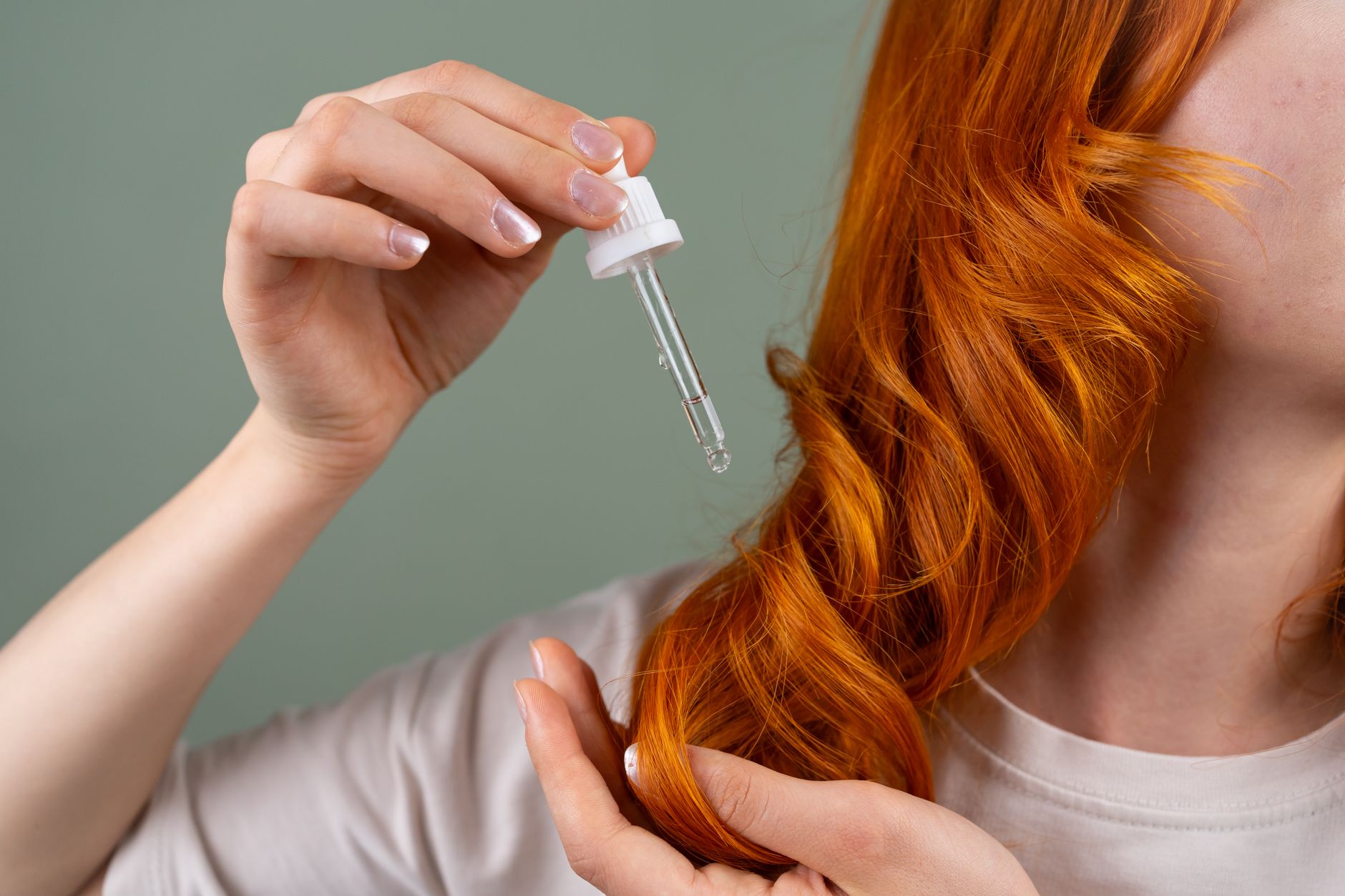
Quick summary
Key Takeaways
- Hair porosity describes how open or closed your hair's cuticle is, which determines how easily moisture enters and leaves the strand.
- The float test is the most widely used at-home porosity test, based on how quickly a hair strand absorbs water and sinks.
- The slip and feel test offers a quick, tool-free way to estimate porosity by directly assessing cuticle texture.
- Curl pattern and porosity are separate characteristics; even hair with the same curl type can have very different porosity levels, making individual testing more reliable than curl-pattern-based assumptions.
- Chemically processed and color-treated hair should generally be expected to test as higher porosity than its natural state, and waiting a week or two after a fresh color service provides a more stable, representative test result.
Hair porosity, how easily your hair absorbs and retains moisture, is one of the most useful things to understand about your hair, yet most people have never actually tested it. Knowing your porosity type helps explain why certain products work beautifully for a friend but leave your hair greasy or dry, and testing it at home takes just a few minutes with things you likely already have.
What Hair Porosity Actually Means
Hair porosity refers to how easily moisture can enter and exit the hair shaft, which is largely determined by the condition of the cuticle, the outermost layer of overlapping scales that protects each hair strand. When the cuticle lies flat and tight, hair is considered low porosity, moisture has a harder time getting in, but also a harder time escaping. When the cuticle is lifted or damaged, hair is considered high porosity, moisture enters easily but also escapes quickly, often leading to frizz and dryness.
Why Porosity Matters for Product Choice
Using products mismatched to your porosity type is one of the most common reasons people struggle with persistent frizz, greasiness, or dryness despite trying numerous products. Low porosity hair often struggles with product buildup from heavy formulas that sit on top of the tightly closed cuticle rather than absorbing, while high porosity hair frequently loses moisture too quickly without heavier, sealing products. Understanding your porosity helps you shop more intentionally rather than relying on trial and error.
The Float Test
Step 1: Collect a Clean Hair Strand
Take a single strand of clean, product-free hair (freshly washed hair with no styling products works best for accuracy).
Step 2: Fill a Glass With Room-Temperature Water
Fill a clear glass about three-quarters full with room-temperature water.
Step 3: Drop the Strand In
Place the hair strand into the water and observe what happens over 2 to 4 minutes.
Step 4: Interpret the Result
- Floats at the top: low porosity
- Floats in the middle: medium (normal) porosity
- Sinks to the bottom: high porosity
The Spray Bottle Test
Step 1: Section Dry, Clean Hair
Take a small section of clean, dry hair.
Step 2: Mist With Water
Spray the section lightly with water from a spray bottle.
Step 3: Observe How Water Behaves
- Water beads and sits on top of the hair for a while: low porosity
- Water absorbs at a moderate, steady pace: medium porosity
- Water absorbs almost immediately: high porosity
This test can be a useful secondary confirmation alongside the float test, since it observes a different aspect of moisture absorption.
The Slip and Feel Test
Step 1: Take a Strand of Clean, Dry Hair
Step 2: Slide Your Fingers Along the Strand From Tip to Root
Feel for texture and resistance as your fingers move against the direction of the cuticle.
Step 3: Interpret the Feel
- Smooth with little resistance: low porosity (tightly closed cuticle)
- Slight roughness: medium porosity
- Noticeably rough or bumpy: high porosity (raised or damaged cuticle)
Visual and Behavioral Clues
Beyond formal tests, everyday hair behavior offers useful clues:
- Takes a long time to get fully wet in the shower, and a long time to dry: suggests low porosity
- Absorbs product quickly but still feels dry or frizzy soon after: suggests high porosity
- Products tend to sit on top of hair rather than absorbing: suggests low porosity
- Hair air-dries relatively quickly and holds styles reasonably well: suggests medium porosity
Interpreting Your Results
If your tests point to different results, this is not uncommon, hair porosity can vary across different sections of the head, particularly if you have chemically treated ends but healthier, undamaged roots. In this case, treating your hair according to its most porous section (usually the ends) while adjusting technique for less porous sections (usually the roots) is a reasonable approach.
Low, Medium, and High Porosity Explained
Low porosity: Cuticle lies flat and tight, making moisture entry difficult. Hair often resists getting wet and can be prone to product buildup. Benefits from lighter products, heat (like a warm towel wrap) to help open the cuticle for better absorption, and humectant-rich, lightweight formulas.
Medium (normal) porosity: Cuticle is moderately open, generally the easiest porosity type to manage, with a good balance of moisture retention and absorption. Requires the least specialized care.
High porosity: Cuticle is raised or damaged, often due to chemical treatments, heat styling, or environmental damage, allowing moisture to enter and escape quickly. Benefits from richer, protein-balanced products and sealing oils or butters to help retain moisture.
Our guides on low porosity hair care and high porosity hair care cover detailed routines for each type.
Comparison Table: Porosity Types at a Glance
| Porosity Type | Cuticle State | Common Cause | Key Care Focus |
|---|---|---|---|
| Low | Tight, flat | Genetics, healthy undamaged hair | Lightweight products, gentle heat for absorption |
| Medium | Moderately open | Genetics, generally healthy hair | Balanced, minimal specialized care needed |
| High | Raised, damaged | Chemical treatments, heat damage, environmental exposure | Rich, protein-balanced products, sealing oils |
Common Testing Mistakes
Testing Hair With Product Residue
Product buildup can skew results, particularly the float test, since silicones and heavy oils can cause hair to float regardless of true porosity. Always test with freshly washed, product-free hair.
Using Hair From Different Areas Without Noting the Difference
If you test hair from your ends versus your roots without distinguishing between them, you may get inconsistent or confusing results that do not reflect a single, clear porosity type.
Relying on a Single Test Alone
Combining two or more tests (float test plus the spray bottle or slip test) gives a more reliable overall picture than relying on just one method.
How Porosity Interacts With Curl Pattern
Porosity and curl pattern are frequently confused or conflated, but they are actually two separate, independent characteristics of hair, and understanding the distinction helps avoid choosing products based on curl type alone while ignoring porosity entirely.
Curl pattern describes the shape of the hair strand, from straight to wavy to tightly coiled, and is determined largely by the shape of the hair follicle. Porosity, by contrast, describes the condition of the cuticle and how it affects moisture movement, which is influenced by genetics but also significantly affected by chemical and heat damage over time. This means two people with the exact same curl pattern can have completely different porosity levels, and product recommendations based purely on curl type (a common approach in much curly hair marketing) may not actually suit your specific porosity needs.
This distinction matters most for coily and tightly curled hair textures, which are statistically more prone to higher porosity due to the natural structure of tighter curls making it harder for scalp oils to travel down the hair shaft, combined with a higher likelihood of chemical processing history in this hair type. However, this is a tendency, not a rule, and testing your actual porosity remains more reliable than assuming it based on curl pattern alone.
What to Do After You Know Your Porosity
Once you have identified your porosity type, review your current product lineup with this information in mind. You may find that persistent frustrations, like products that never seem to absorb, or hair that always feels dry despite heavy conditioning, are explained by a porosity mismatch rather than simply needing "better" products. Adjusting product weight, application technique, and whether you use heat to aid absorption can make a significant difference once aligned with your actual porosity type.
Porosity Testing for Color-Treated and Chemically Processed Hair
Color-treated and chemically processed hair deserves special consideration when testing porosity, since the chemical processes involved almost always raise porosity to some degree by lifting the cuticle, regardless of what your hair's natural, untreated porosity might have been.
For recently colored hair, waiting at least one to two weeks after a coloring or lightening service before testing gives a more stable picture, since hair can behave somewhat unpredictably in the immediate aftermath of a chemical service. Testing too soon after processing may show artificially extreme high-porosity results that partially normalize once the hair settles, though color-treated hair will still generally register as higher porosity than it was before treatment.
For chemically relaxed or permed hair, porosity is almost always significantly elevated compared to the hair's natural state, since these processes fundamentally alter the protein structure of the hair shaft. In this case, testing serves less to determine "if" porosity has increased and more to confirm the degree, which can help guide how aggressively to incorporate protein-balancing and moisture-sealing products into a routine.
Common Mistakes to Avoid
Assuming Porosity Never Changes
While genetics play a role in baseline porosity, chemical treatments, heat damage, and environmental exposure can shift your hair toward higher porosity over time, meaning it is worth retesting periodically, especially after a significant change like coloring or a keratin treatment.
Ignoring Porosity When Choosing Products
Continuing to buy products based on trends or reviews alone, without considering porosity, often leads to the same frustrations repeating regardless of how many new products you try.
Testing Only Once and Never Reassessing
Since porosity can change with treatments and damage, a single test years ago may no longer reflect your hair's current state.
- Test multiple sections of hair, especially if you have color-treated or heat-styled ends versus more natural roots.
- Combine at least two testing methods for a more reliable result.
- Retest after major hair treatments, such as coloring, relaxing, or significant heat damage.
- Use your results to guide product weight and layering order, not just which specific brand to buy.
Conclusion
Testing your hair porosity at home takes only a few minutes and can meaningfully change how you approach product selection and hair care technique. The float test, combined with the spray bottle or slip and feel tests, gives a reliable picture of whether your hair is low, medium, or high porosity, information that explains many common hair frustrations once properly understood.
For detailed care routines based on your results, see our guides on low porosity hair care and high porosity hair care.
Category: Hair Care
Tags: hair porosity, porosity test, float test, low porosity hair, high porosity hair, hair cuticle, hair care basics, moisture absorption, hair health, hair testing methods
Frequently Asked Questions
References
Last updated
This article is for informational purposes only and does not constitute medical advice. Consult a licensed dermatologist or healthcare provider before starting any new treatment.
Beauty & Hair Care Editor
Amanda Gurton is a beauty editor and researcher with a focus on translating dermatology and trichology insights into clear, actionable advice. She covers skincare routines, hair health, ingredient science, and everyday beauty habits.
Comments (0)
Be the first to comment.
Related Articles
How to Test Hair Elasticity and Why It Matters
Learn how to test your hair's elasticity at home, what the results mean, and how to improve elasticity for stronger, healthier hair.
Building a Hair Routine Around Porosity and Density Together
Learn how to build a hair care routine that accounts for both porosity and density together, with practical combinations and product strategies.
Best Products for Each Hair Porosity Type
Find the best hair products for low, medium, and high porosity hair, with specific ingredient recommendations and application tips for each type.
Hair Breakage vs. Shedding: How to Tell the Difference
Hair breakage vs shedding: learn how to identify each one, what causes them, and the different solutions each problem requires.