 Funky Millions
Exfoliating Toner vs. Physical Scrub: Which Is Gentler?
Exfoliating toner vs physical scrub: compare which method is gentler, more effective, and better suited to your skin type and concerns.
Quick summary
Key Takeaways
- Exfoliating toners use chemical acids to dissolve the bonds between dead skin cells, rather than physically scraping them away.
- Physical scrubs use granular particles and manual friction to mechanically remove dead skin cells from the surface.
- Exfoliating toners generally provide more even, controlled exfoliation with a lower risk of micro-tears compared to physical scrubs.
- The main advantage of exfoliating toners over scrubs is the elimination of mechanical micro-tear risk, which is a common but often invisible source of skin irritation.
- The environmental phase-out of plastic microbeads inadvertently pushed many physical scrub reformulations toward sharper, more irritating natural particles, contributing to the broader industry shift toward chemical exfoliating toners.
- Both methods require moderation and appropriate follow-up moisturizing, but physical scrubs demand more careful technique to avoid over-exfoliation.
- While physical scrubs may seem more cost-effective per bottle, a well-chosen exfoliating toner can offset its cost by reducing the need for additional treatment products elsewhere in the routine.
For years, physical scrubs were the default exfoliation method, but exfoliating toners have increasingly become the preferred choice among dermatologists and skincare enthusiasts alike. Comparing exfoliating toner vs physical scrub comes down to understanding how each method actually interacts with skin, and why one has fallen out of favor for facial use while remaining a fine option elsewhere.
What Is an Exfoliating Toner?
An exfoliating toner is a liquid product, typically applied with a cotton pad or patted in with hands, containing chemical exfoliants like AHAs, BHA, or PHA. Rather than physically scraping away dead skin cells, it dissolves the bonds holding them together, allowing for more even, controlled exfoliation. Our guide on AHA vs BHA vs PHA covers the specific acid types commonly found in these formulas.
What Is a Physical Scrub?
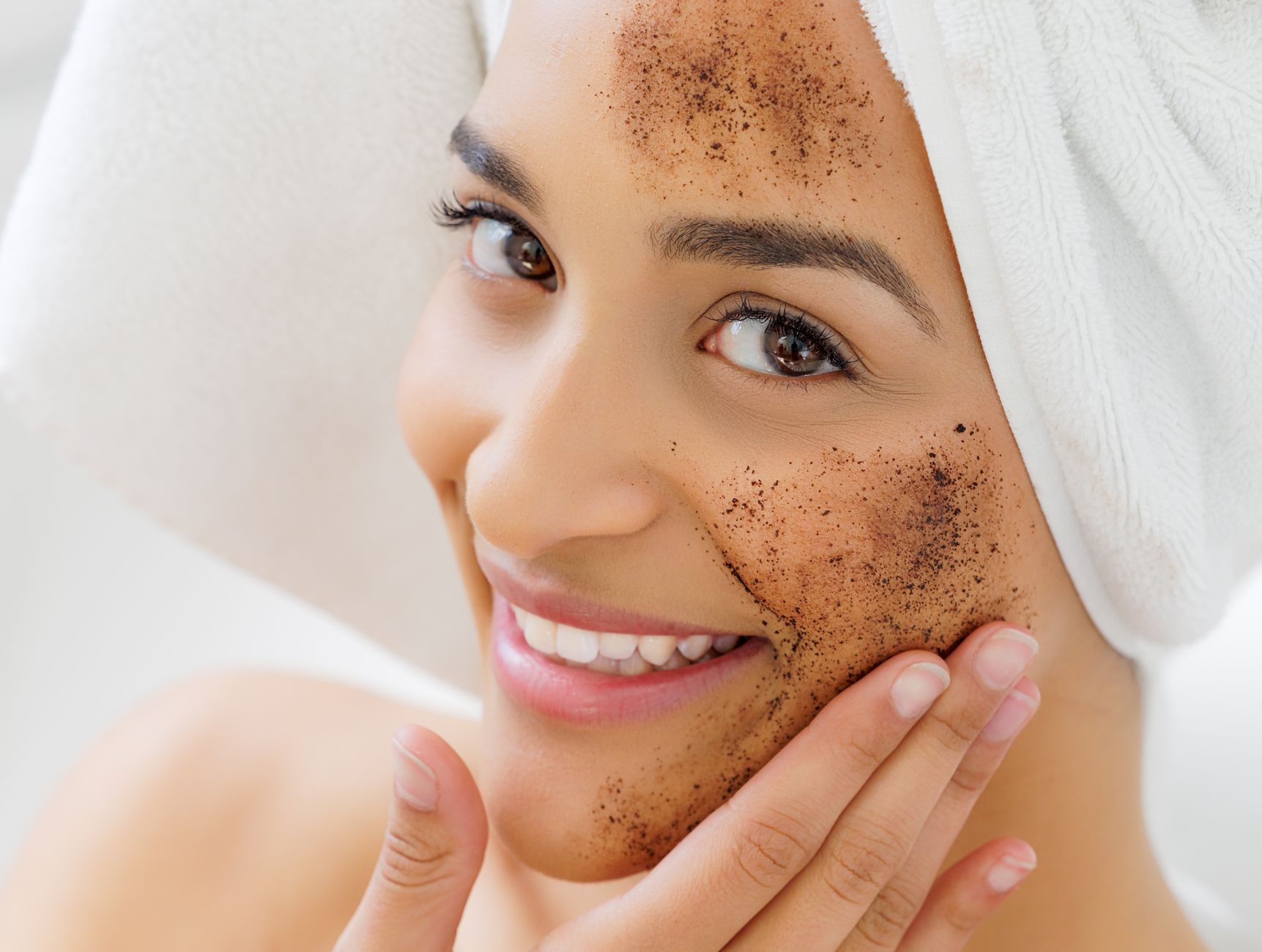
A physical scrub is a product containing granular particles, such as sugar, salt, ground nut shells, microbeads (now largely phased out for environmental reasons), or synthetic exfoliating beads, that mechanically buff away dead skin cells through friction. Physical scrubs provide immediate, tactile smoothness but rely entirely on the size, shape, and application pressure of the particles, which can vary significantly in gentleness between products.
How Each Method Actually Works on Skin
Chemical exfoliation via toner works at a molecular level, breaking down the "glue" (desmosomes) that holds dead skin cells together, allowing for even, controlled removal without direct mechanical force. Physical scrubbing works through direct abrasion, and its gentleness depends heavily on particle shape and size, irregular, sharp-edged particles (like crushed nut shells) can create microscopic tears in the skin's surface, while smoother, rounder particles are less likely to cause this kind of damage.
Exfoliating Toner vs. Physical Scrub Comparison Table
| Feature | Exfoliating Toner | Physical Scrub |
|---|---|---|
| Mechanism | Dissolves cell bonds chemically | Mechanically abrades surface |
| Evenness of exfoliation | Very even across the skin | Depends on hand pressure and technique |
| Risk of micro-tears | Low | Moderate to high, depending on particle type |
| Immediate tactile smoothness | Less immediate | More immediate |
| Best for | Most skin types, especially acne-prone and sensitive | Thicker-skinned body areas, occasional use |
| Dermatologist preference | Generally preferred for facial skin | Used more cautiously, often for body |
Why Dermatologists Often Favor Chemical Exfoliation
The primary concern with physical scrubs, particularly on facial skin, is the risk of micro-tears, tiny abrasions in the skin's surface that are not always visible but can compromise the barrier and lead to increased sensitivity, irritation, and even worsened acne if bacteria enter through these micro-injuries. Chemical exfoliation via toner avoids this mechanical risk entirely, working at a consistent, controllable level regardless of hand pressure or technique, which is part of why it has become the preferred method among dermatologists for regular facial exfoliation.
When Physical Scrubs Still Make Sense
Physical scrubs are not universally problematic, they simply require more careful selection and use. They can work well for:
- Thicker-skinned body areas, like elbows, knees, and feet, where the skin barrier is more resilient
- Occasional, gentle use on the face with a very fine-particle, smooth-textured scrub for those who tolerate them well
- People who specifically prefer the immediate tactile result and use appropriately gentle products with light pressure
Our guide on how to exfoliate body skin covers where physical exfoliation remains a reasonable choice in more detail.
Signs a Scrub Is Too Harsh for Your Skin
- Visible redness immediately after use that does not fade quickly
- A "raw" or stinging sensation during or after application
- Increased breakouts following scrub use
- Rough, irregular particles that feel sharp or gritty rather than smooth
If you notice any of these signs, switching to a chemical exfoliating toner or a much gentler, finer-particle scrub is advisable.
The Environmental Angle Behind the Shift Away From Scrubs
Part of why exfoliating toners have become so dominant in modern skincare has as much to do with environmental regulation as it does with skin science. Plastic microbeads, once a standard ingredient in many physical scrubs due to their uniform size and low cost, were phased out across numerous countries starting in the mid-2010s after research revealed they were passing through water treatment systems largely intact and accumulating in oceans and waterways, where they posed a documented risk to marine life.
This regulatory shift forced many brands to reformulate their scrub products with biodegradable alternatives, such as ground fruit pits, sugar, or salt, but these natural substitutes often reintroduced the sharp-edged particle problem that microbeads had actually helped solve, since uniform plastic beads were generally rounder and more consistent in shape than many natural alternatives. This unintended consequence, solving an environmental problem while reintroducing a skin irritation one, is part of why the skincare industry's broader shift toward chemical exfoliation accelerated around the same period, offering a solution that sidestepped both concerns simultaneously.
How to Choose the Right Exfoliating Toner
- For oily/acne-prone skin: choose a BHA (salicylic acid) toner
- For dullness/uneven tone: choose an AHA (glycolic or lactic acid) toner
- For sensitive skin: choose a PHA toner, the gentlest chemical exfoliation option
- Check concentration: lower percentages (5-10% for AHA/BHA toners) are generally appropriate for regular use, with higher concentrations reserved for occasional, more intensive treatment
How to Use Each Method Safely
Exfoliating Toner
- Apply to clean, dry skin using a cotton pad or clean hands
- Start with 2-3 times per week, increasing gradually based on tolerance
- Follow with moisturizer and, in the morning, sunscreen
Physical Scrub (If Using)
- Apply to damp skin with very light pressure
- Use small, gentle circular motions, avoiding dragging or excessive friction
- Limit use to 1-2 times per week for facial skin
- Rinse thoroughly and follow with moisturizer
Combining Both Methods
Some people use a gentle physical scrub occasionally on the body while relying on a chemical exfoliating toner for facial skin, capturing the immediate tactile benefit where skin is more resilient while avoiding the micro-tear risk on more delicate facial skin. Combining both a scrub and a chemical exfoliant on the face in the same session is generally not recommended, since this significantly increases the risk of over-exfoliation and barrier damage.
Cost and Longevity Differences Worth Considering
Beyond the direct skin benefits, there are practical cost and product-longevity differences between the two exfoliation methods that can factor into which one fits better into a long-term routine.
Physical scrubs are generally used up more slowly relative to their price, since a small amount typically covers the face and application does not require the same careful, incremental buildup that chemical exfoliants do. This can make them appear more cost-effective on a per-bottle basis, particularly for those exfoliating only occasionally.
Exfoliating toners, especially at higher-quality formulations with well-chosen acid concentrations, tend to be used more frequently as part of a regular routine, which affects how quickly a bottle is used up. However, because chemical exfoliation often reduces or eliminates the need for other separate treatment products, some people find their overall product spending evens out or even decreases after switching from a scrub-based routine to one built around a well-formulated exfoliating toner, since fewer products are needed to achieve smoother, more even-toned skin.
Common Mistakes to Avoid
Using a Scrub With Sharp, Irregular Particles on the Face
Crushed nut shells and similarly sharp-edged particles are more likely to cause micro-tears than smooth, rounded exfoliating beads or sugar-based formulas.
Scrubbing Too Hard or Too Long
Excessive pressure or duration increases irritation risk regardless of how gentle the product formula itself is.
Combining Scrubs and Chemical Exfoliants in the Same Routine
Layering both methods significantly raises the risk of over-exfoliation and a compromised skin barrier.
Assuming "Natural" Scrub Ingredients Are Automatically Gentle
Natural does not always mean gentle. Some natural exfoliating particles, like crushed apricot pits, are actually among the harshest options due to their sharp, irregular shape.
Transitioning From Scrubs to Chemical Exfoliation
For those who have relied on physical scrubs for years and want to transition to an exfoliating toner, a gradual overlap period tends to produce a smoother adjustment than an abrupt switch. Rather than stopping scrubs entirely on the same day you introduce a chemical toner, reducing scrub frequency by half while introducing the toner at a low frequency, then phasing out the scrub entirely over two to three weeks, gives skin time to adjust to the new method without the compounded irritation risk of essentially trying two new exfoliation habits simultaneously.
Many people notice their skin's texture actually improves once fully transitioned, since the even, controlled nature of chemical exfoliation tends to produce more consistent results over time than scrubs, which can vary in effect depending on hand pressure and technique from one use to the next.
- Choose smooth, rounded particles if you do use a physical scrub, rather than sharp, irregular ones.
- Start with a lower-concentration chemical toner and build up frequency gradually rather than starting with daily use.
- Reserve physical scrubs for the body where skin is generally more resilient to mechanical exfoliation.
- Always follow either method with moisturizer and, during the day, sunscreen, since exfoliation increases sun sensitivity.
Conclusion
The exfoliating toner vs physical scrub comparison generally favors chemical exfoliation for facial skin, given its more even action and lower risk of micro-tears, while physical scrubs remain a reasonable choice for thicker-skinned body areas when used gently with appropriate particle types. Understanding how each method actually interacts with skin helps you choose the right approach for your specific skin type and concerns, rather than defaulting to whichever method feels most immediately satisfying.
For more on chemical exfoliation options, see our guide on AHA vs BHA vs PHA, and for body-specific exfoliation, see how to exfoliate body skin.
Category: Skin Care
Tags: exfoliating toner, physical scrub, chemical exfoliation, micro-tears, AHA BHA PHA, skin barrier, exfoliation methods, sensitive skin, skincare basics, dead skin cells
Frequently Asked Questions
References
Last updated
This article is for informational purposes only and does not constitute medical advice. Consult a licensed dermatologist or healthcare provider before starting any new treatment.
Beauty & Hair Care Editor
Amanda Gurton is a beauty editor and researcher with a focus on translating dermatology and trichology insights into clear, actionable advice. She covers skincare routines, hair health, ingredient science, and everyday beauty habits.
Comments (0)
Be the first to comment.
Related Articles
Mandelic Acid: The Best Acid for Sensitive Skin
Discover the top mandelic acid benefits for sensitive skin, how to use it safely, product tips, and expert advice for a smoother, brighter complexion.

Skin Purging vs. Breaking Out: How to Tell the Difference
Is your skin purging or just breaking out? Learn the key differences, how long purging lasts, and when to stop a new skincare product.

Skin Barrier vs. Skin Microbiome: What's the Difference?
Confused about the skin barrier vs skin microbiome? Learn how they differ, how they work together, and how to care for both for healthier skin.
What to Look for in a Barrier Repair Moisturizer
Learn exactly which ingredients make an effective barrier repair moisturizer, what to avoid, and how to choose the right one for damaged skin.