 Funky Millions
Fungal Acne (Malassezia Folliculitis): Causes and Treatment
Learn what fungal acne (Malassezia folliculitis) really is, how it differs from regular acne, and the ingredients that actually treat it.
Quick summary
Key Takeaways
- Fungal acne is a yeast overgrowth in hair follicles, not a bacterial or hormonal form of acne, which is why standard acne treatments often do not work.
- Uniform size, itchiness, and lack of response to standard acne treatment are the strongest clues pointing to fungal acne rather than bacterial acne.
- Effective fungal acne treatment relies on antifungal ingredients, not the benzoyl peroxide or standard acne acids used for bacterial acne.
- Treating fungal acne means switching to antifungal ingredients and eliminating the fatty, occlusive products that feed the yeast overgrowth.
- Moisture-wicking workout clothing, prompt post-exercise showering, and consistent antifungal washing are particularly important preventive habits for physically active people prone to fungal acne.
- Fungal acne, dandruff, and tinea versicolor are all caused by the same Malassezia yeast overgrowth in different areas, so treating them with a coordinated antifungal approach is often more effective than addressing each in isolation.
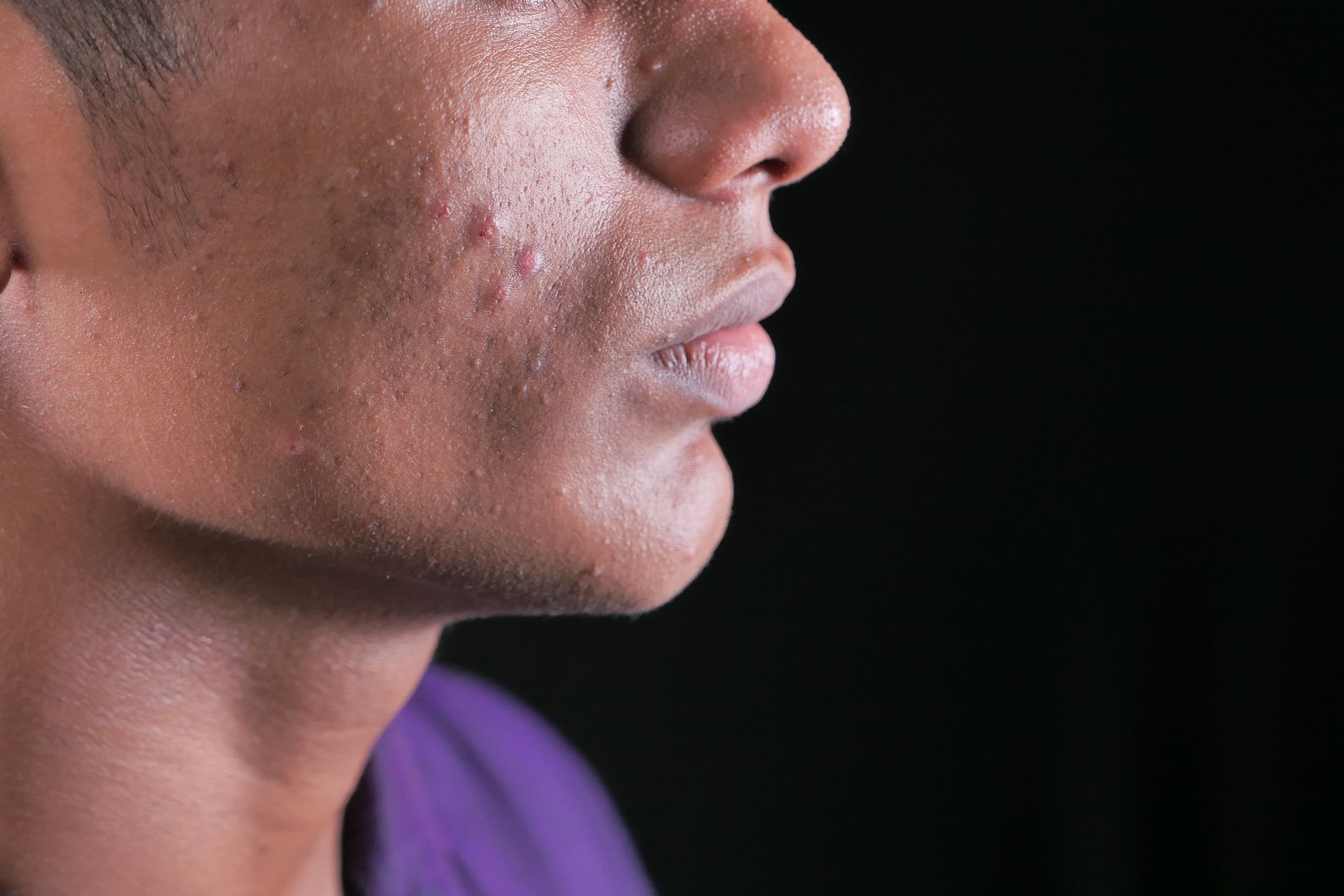
If you have small, itchy, uniform bumps that never seem to respond to typical acne treatment, you might be dealing with fungal acne rather than bacterial acne. Despite the name, fungal acne, medically known as Malassezia folliculitis or pityrosporum folliculitis, is not acne at all, it is a yeast overgrowth in hair follicles that is commonly mistaken for regular breakouts. This guide explains the real cause, how to tell it apart from typical acne, and which ingredients actually help.
What Is Fungal Acne, Really?
Fungal acne is caused by an overgrowth of Malassezia yeast, a type of fungus that naturally lives on everyone's skin in small amounts. When this yeast overgrows within hair follicles, it triggers inflammation that produces small, uniform, often itchy bumps that closely resemble bacterial acne on the surface. Because it looks similar to acne but is caused by a completely different organism, typical acne treatments, which target bacteria, often fail to improve or can even worsen fungal acne.
What Causes Malassezia Folliculitis
Several factors create conditions that favor Malassezia overgrowth:
- Heat and humidity, since yeast thrives in warm, moist environments
- Occlusive skincare or hair products containing oils and fatty acids that feed Malassezia
- Excessive sweating without prompt showering, especially after exercise
- Tight, non-breathable clothing that traps moisture against the skin
- Antibiotic use, which can disrupt the skin's microbial balance and allow yeast to overgrow
- Weakened immune function, which can reduce the body's natural regulation of yeast populations
Fungal Acne vs. Regular Acne: Key Differences
The most reliable way to distinguish the two is by texture, distribution, and response to treatment.
| Feature | Fungal Acne (Malassezia) | Regular (Bacterial) Acne |
|---|---|---|
| Bump appearance | Small, uniform in size, often itchy | Varies in size, whiteheads, blackheads, cysts |
| Itchiness | Common | Uncommon, though possible with inflammation |
| Distribution | Clustered, uniform pattern | Scattered, varied sizes |
| Common locations | Chest, back, shoulders, forehead hairline | Face, jawline, back |
| Response to benzoyl peroxide | Little to no improvement | Often improves |
| Response to antifungal treatment | Improves | No expected effect |
| Worsens with oily/occlusive products | Yes, significantly | Can worsen but less specifically tied to oils |
Where Fungal Acne Typically Appears
Malassezia folliculitis most commonly appears on the chest, back, and shoulders, areas with a higher concentration of sebaceous (oil) glands that provide the fatty acids the yeast feeds on. It can also appear along the forehead hairline and jawline. This distribution pattern is another useful clue, since bacterial acne is more evenly distributed across the face, while fungal acne often clusters in these specific oil-gland-dense zones.
Fungal Acne Comparison Table
| Aspect | Details |
|---|---|
| Medical name | Malassezia folliculitis (also called pityrosporum folliculitis) |
| Cause | Overgrowth of Malassezia yeast in hair follicles |
| Common triggers | Heat, humidity, occlusive products, sweat, antibiotics |
| Effective treatments | Antifungal shampoos/washes, azole antifungals, sulfur |
| Ineffective treatments | Benzoyl peroxide, most bacterial acne treatments |
| Typical resolution time | 2 to 8 weeks with appropriate antifungal treatment |
Ingredients That Trigger Fungal Acne
Malassezia yeast feeds on certain fatty acids, so skincare and haircare products containing these ingredients can worsen fungal acne:
- Many fatty acid-rich oils (oleic acid-heavy oils in particular)
- Certain esters and fatty alcohols common in heavier moisturizers
- Some hair conditioners and styling products that transfer onto the back and shoulders in the shower
People managing fungal acne often research "non-comedogenic" claims specifically for fungal-acne safety, since a product can be non-comedogenic for regular pores but still feed Malassezia.
Ingredients That Treat Fungal Acne
| Ingredient | How It Helps | Where to Find It |
|---|---|---|
| Ketoconazole | Antifungal, directly targets Malassezia | Medicated shampoos, prescription creams |
| Zinc pyrithione | Antifungal and antibacterial | Dandruff shampoos, used as a body wash |
| Selenium sulfide | Antifungal | Medicated shampoos |
| Sulfur | Antifungal and anti-inflammatory | Spot treatments, masks |
| Salicylic acid | Exfoliates follicles, indirectly helps | Body washes, leave-on treatments |
Our guide on zinc for acne discusses zinc's role in supporting skin more broadly, though the pyrithione form used for fungal acne treatment is distinct from oral or topical zinc used for bacterial acne.
How to Build a Fungal-Acne-Safe Routine
Step 1: Simplify Your Product Lineup
Remove heavy, oil-rich products from affected areas while you address the overgrowth.
Step 2: Use an Antifungal Wash as a Body or Face Wash
Ketoconazole or zinc pyrithione shampoos can be used as a short-contact wash on affected areas, left on for a few minutes before rinsing.
Step 3: Shower Promptly After Sweating
Since Malassezia thrives in warm, moist conditions, showering soon after exercise or heavy sweating helps limit its growth.
Step 4: Choose Lightweight, Fungal-Acne-Safe Moisturizers
Look for lightweight, gel-based formulas that avoid heavy fatty acid content.
Step 5: Be Patient
Improvement typically takes two to eight weeks of consistent antifungal treatment.
Fungal Acne and Exercise Habits
Athletes and regularly active people represent one of the populations most prone to fungal acne, and understanding the specific exercise-related patterns that contribute to flare-ups can make prevention far more effective than treatment alone.
Tight, synthetic athletic wear, while excellent for performance, traps heat and sweat directly against the skin for extended periods, creating close to ideal conditions for Malassezia overgrowth, particularly on the back, chest, and shoulders where fabric sits snugly against skin during workouts. Choosing moisture-wicking fabrics, which pull sweat away from the skin's surface rather than holding it in place, can meaningfully reduce this risk compared to non-wicking cotton blends that stay damp for longer.
Post-workout habits matter just as much as clothing choice. Sitting in sweaty workout clothes for an extended period after exercise, whether due to a long commute home or simply not prioritizing an immediate shower, significantly extends the time skin spends in a warm, moist environment. For people prone to fungal acne, keeping a change of clothes and body wipes on hand for immediately after a workout, even when a full shower is not possible right away, can meaningfully reduce flare-up frequency.
Shared gym equipment and locker room surfaces are a less commonly discussed but relevant factor, since Malassezia and other skin flora can transfer between surfaces and skin. Using a clean towel as a barrier on shared equipment and showering with an antifungal wash after gym visits, rather than only during an active flare-up, can serve as an ongoing preventive habit for those with a history of recurrent fungal acne.
Over-the-Counter Treatment Options
Many people successfully manage mild to moderate fungal acne with over-the-counter antifungal dandruff shampoos (containing ketoconazole, zinc pyrithione, or selenium sulfide) used as a body or face wash. Apply to affected areas, leave on for three to five minutes, then rinse thoroughly, two to three times per week initially.
When to See a Dermatologist
Consider seeing a dermatologist if:
- Symptoms do not improve after four to six weeks of consistent over-the-counter antifungal treatment
- The affected area is widespread or significantly itchy
- You are unsure whether you are dealing with fungal acne, bacterial acne, or another condition, since accurate diagnosis often benefits from professional evaluation
- You need a prescription-strength antifungal for more resistant cases
A dermatologist can confirm the diagnosis, sometimes with a simple skin scraping, and prescribe stronger oral or topical antifungal treatment if needed.
Fungal Acne and Its Connection to Other Malassezia Conditions
Malassezia yeast is responsible for more than just fungal acne, and understanding its broader footprint can help explain why some people experience several related issues at once, or why a fungal acne flare-up sometimes coincides with other symptoms.
The same yeast overgrowth that causes Malassezia folliculitis is also responsible for seborrheic dermatitis, the flaky, sometimes itchy condition that affects the scalp, eyebrows, and sides of the nose, and is the underlying cause of most cases of dandruff. It is also responsible for tinea versicolor, a condition causing patchy, discolored areas of skin, often on the chest and back, the same zones where fungal acne commonly appears. People who notice fungal acne on their chest or back sometimes also notice dandruff or flaking near the hairline, which is not a coincidence, both reflect the same underlying yeast overgrowth in different follicular environments.
This connection matters practically because someone dealing with both scalp flaking and chest or back fungal acne may benefit from a coordinated approach, using the same antifungal active ingredient, such as ketoconazole, on both areas rather than treating them as entirely separate problems. It also explains why some dermatologists ask about scalp and hairline symptoms even when a patient's primary complaint is chest or back breakouts, since the presence of one Malassezia-related condition raises the likelihood of another.
Common Mistakes to Avoid
Treating Fungal Acne With Standard Acne Products
Benzoyl peroxide and many standard acne treatments target bacteria, not yeast, and will not resolve fungal acne, sometimes worsening irritation without addressing the actual cause.
Continuing to Use Trigger Ingredients
Using heavy, fatty-acid-rich products while trying to treat fungal acne undermines treatment progress, since the yeast continues to have a food source.
Giving Up Too Soon
Antifungal treatment typically takes several weeks to show clear improvement. Stopping after just a few days is a common reason people believe treatment "didn't work."
Not Addressing Hair Products
Conditioners and styling products that run down the back and shoulders during showers are an overlooked trigger for chest and back fungal acne.
- Wash affected areas last in the shower to avoid other products running over them.
- Wear breathable fabrics during and after exercise to reduce moisture buildup.
- Avoid picking or exfoliating aggressively, which can spread the yeast to new follicles.
- Consider a fungal-acne-safe research approach when choosing new skincare and body care products if you are prone to recurrence.
Conclusion
Fungal acne is a common but frequently misdiagnosed condition, mistaken for bacterial acne despite requiring an entirely different treatment approach. Recognizing the telltale signs, uniform, itchy bumps clustered on the chest, back, or hairline that resist typical acne treatment, can save significant time and frustration. Switching to antifungal ingredients and eliminating trigger products typically resolves the issue within a few weeks.
For more on managing related skin concerns, see our guide on zinc for acne.
Category: Skin Care
Tags: fungal acne, Malassezia folliculitis, pityrosporum folliculitis, antifungal treatment, ketoconazole, zinc pyrithione, body acne, itchy bumps, skincare troubleshooting, acne misdiagnosis
Frequently Asked Questions
References
Last updated
This article is for informational purposes only and does not constitute medical advice. Consult a licensed dermatologist or healthcare provider before starting any new treatment.
Beauty & Hair Care Editor
Ilma is a beauty editor who specializes in breaking down cosmetic ingredients, skincare routines, and hair care practices. Her work focuses on evidence-based guidance readers can trust and apply.
Comments (0)
Be the first to comment.
Related Articles

Skin Purging vs. Breaking Out: How to Tell the Difference
Is your skin purging or just breaking out? Learn the key differences, how long purging lasts, and when to stop a new skincare product.
How Long Does Retinol Purging Last? A Realistic Timeline
How long does retinol purging last? Get a realistic week-by-week timeline, what's normal, and when to worry about your skin's reaction.

Skin Barrier vs. Skin Microbiome: What's the Difference?
Confused about the skin barrier vs skin microbiome? Learn how they differ, how they work together, and how to care for both for healthier skin.
Scalp Microbiome and Hair Health: What the Research Shows
Learn how the scalp microbiome affects hair health, dandruff, and hair loss, and how to support a balanced scalp ecosystem.