 Funky Millions
Jade Roller vs Gua Sha: Which Facial Tool Is Best
Compare jade roller vs gua sha benefits, techniques, and routines to decide which facial tool fits your skincare goals best.
Quick summary
Key Takeaways
- A jade roller's rolling mechanism offers a simple, intuitive, evenly-distributed pressure application, making it especially approachable for facial tool beginners.
- Gua sha's flat, directional-stroke design allows for more precise, adjustable pressure than a roller, though it requires more technique to use effectively.
- Jade rollers suit general, low-effort relaxation and de-puffing well, while gua sha better addresses more targeted, specific facial concerns through its adjustable technique.
- Both tools originate from traditional Chinese medicine and beauty practices, with gua sha's history in tension-relief and jade's cultural association with facial beauty explaining their distinct traditional purposes and modern design differences.
- Your choice between a jade roller and gua sha, or both, should depend on your willingness to learn technique and whether you're targeting general relaxation or specific facial concerns.
- Material choice across both jade rollers and gua sha tools comes down primarily to durability, temperature retention, and budget rather than any meaningfully different skincare benefit between stone types.
- Placing either tool immediately after applying facial oil or serum, and treating the practice as a consistent, low-pressure ritual, supports both product absorption and the relaxation benefits central to their appeal.
Jade rollers and gua sha tools are both popular facial skincare tools rooted in similar traditions, and while they share some overlapping benefits like temporary de-puffing and relaxation, their technique and specific strengths differ meaningfully enough to inform which tool, or combination of both, best suits your routine. This jade roller vs gua sha guide compares the two directly to help you choose confidently.
For a deeper look at technique, see our complete gua sha facial tool guide.
Jade Roller: What It Is and How It Works
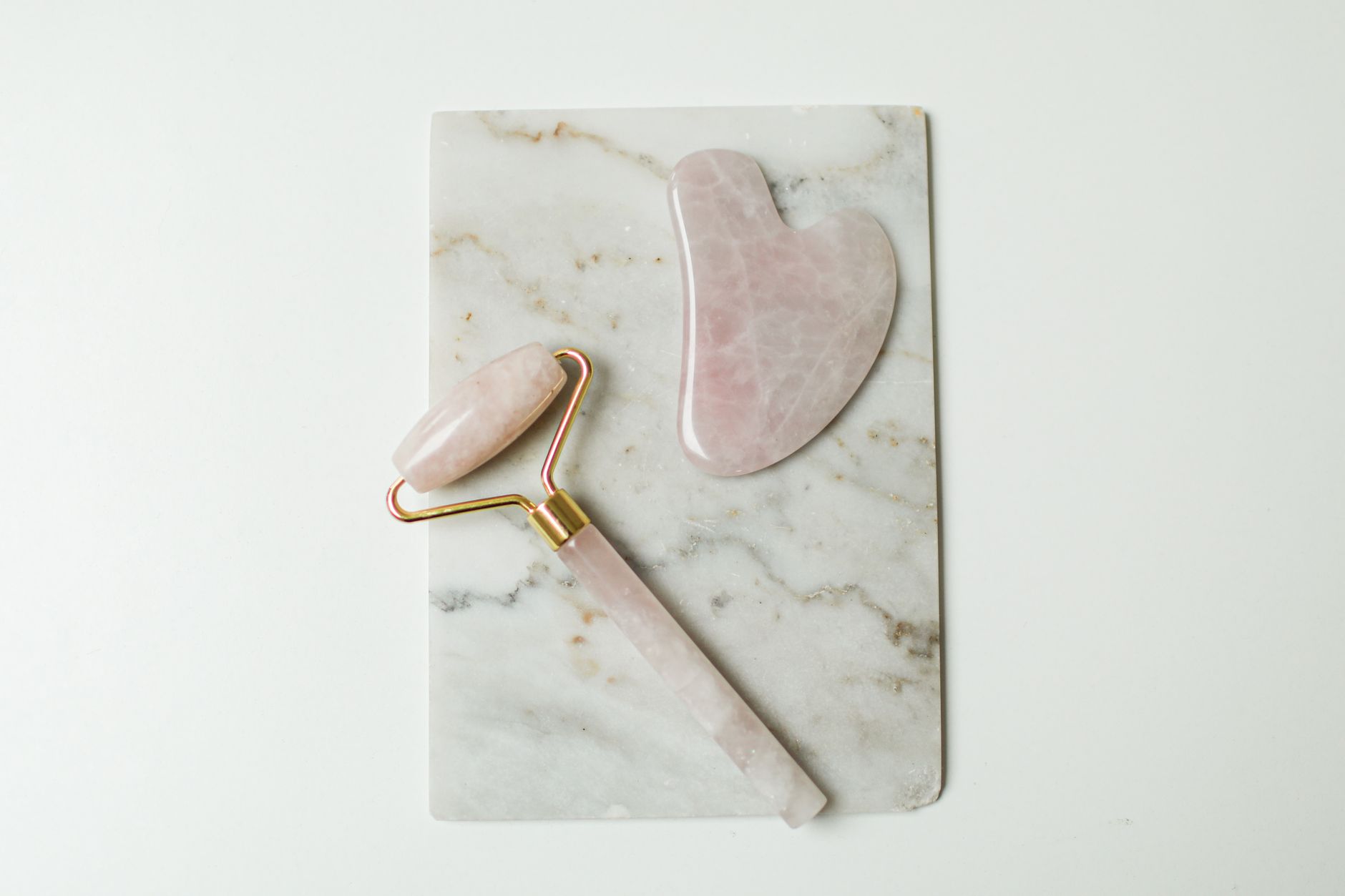
A jade roller consists of a smooth jade (or sometimes other stone) roller head attached to a handle, designed to be rolled across the face in gentle, repeated motions. Its rolling mechanism naturally distributes even, consistent pressure across the skin, making it a particularly approachable tool for those new to facial tools, given its intuitive, low-learning-curve use.
Gua Sha: What It Is and How It Works
A gua sha tool is a flat, often curved stone tool used with sweeping, directional strokes rather than a rolling motion, allowing for more targeted, adjustable pressure across different facial areas, including precise strokes along the jawline or under the eyes that a roller's fixed shape can't replicate as precisely. This flat-edge design allows for more varied stroke techniques but comes with a somewhat steeper learning curve than a roller's simpler motion.
Key Technique Differences
Jade rollers move in a single rolling motion, generally from the center of the face outward, requiring minimal technique adjustment across different facial areas. Gua sha involves more varied stroke directions and requires learning appropriate pressure and angle adjustments for each facial zone, from the flatter strokes suited to the forehead to the more precise, gentler strokes needed under the eyes.
Which Tool Suits Which Skin Concerns
For general relaxation, light de-puffing, and ease of use, particularly for those newer to facial tools, a jade roller's simplicity offers an accessible starting point. For more targeted concerns, like specific jawline definition, under-eye puffiness, or forehead tension release, gua sha's more precise, adjustable technique often addresses these specific areas somewhat more effectively than a roller's uniform motion.
Can You Use Both Together
Yes, many people incorporate both tools into their routine, using gua sha for more targeted, technique-focused work on specific areas of concern, followed by a jade roller for a quicker, more relaxing finishing step, or vice versa depending on personal preference and available time. There's no meaningful downside to using both, aside from the additional time required, since their light, non-abrasive nature makes combined use in the same routine perfectly reasonable.
The History and Cultural Context Behind Both Tools
Both jade rollers and gua sha trace their origins to traditional Chinese medicine, though their paths to mainstream Western skincare popularity differed somewhat. Gua sha, historically practiced primarily on the body, has documented use dating back centuries as a technique intended to relieve muscle tension and stimulate circulation. Jade, prized in Chinese culture for centuries as a symbol of health, purity, and prosperity, was crafted into rollers more specifically for facial use, becoming a facial beauty tool in Chinese royal courts before eventually reaching a global audience. Understanding this shared but distinct origin helps explain why the two tools, despite both being stone-based and used on the face, have somewhat different traditional purposes: gua sha's roots as a scraping, tension-relief technique explain its more targeted, directional stroke pattern, while jade's cultural association with facial beauty specifically, combined with the simpler engineering of a rolling mechanism, explain the roller's more universally soothing, general-purpose design. Both tools experienced a significant surge in mainstream popularity over the past decade, driven substantially by social media, which introduced both practices to a much broader audience than their traditional cultural contexts alone would have reached, though this popularity surge has also led to some exaggerated claims about dramatic transformative benefits that go beyond what either tool can realistically deliver, making it worth approaching both with an appreciation for their genuine, if more modest, benefits rather than expecting results promised by more sensationalized marketing.
Comparison Table: Jade Roller vs. Gua Sha
| Factor | Jade Roller | Gua Sha |
|---|---|---|
| Learning curve | Low, simple rolling motion | Moderate, requires directional technique |
| Precision | Lower, fixed rolling shape | Higher, adjustable stroke angles |
| Best for | General relaxation, easy daily use | Targeted concerns, jawline definition |
| Time per session | 2-3 minutes | 3-5 minutes |
Choosing Based on Your Routine and Preferences
If you're new to facial tools or want a quick, low-effort addition to your routine, a jade roller's simplicity makes it the more approachable starting point. If you're willing to learn proper technique and want more targeted results for specific concerns like jaw tension or under-eye puffiness, gua sha's precision offers more customizable benefit, and many people eventually incorporate both tools once comfortable with gua sha's technique.
Material Considerations Across Both Tool Types
Both jade rollers and gua sha tools are available in a range of stone materials beyond jade itself, and while marketing sometimes emphasizes distinct metaphysical properties for each stone, from an evidence-based skincare perspective, the practical differences are more about physical properties than any inherent energetic effect. Rose quartz, a popular alternative to jade for both roller and gua sha tools, tends to be slightly softer than jade, meaning rose quartz tools may be somewhat more prone to chipping or scratching over long-term use, though this difference is generally minor for typical home use. Stainless steel gua sha tools, less common as rollers, offer superior durability and don't carry the risk of cracking that stone tools do, along with an excellent ability to retain a cool temperature when refrigerated, making them a practical choice for those prioritizing durability over the traditional stone aesthetic. Amethyst and aventurine are less common but available options for both tool types, generally offering similar practical performance to rose quartz in terms of hardness and temperature retention. Whichever material you choose, ensuring the tool has a genuinely smooth, well-polished surface free of rough patches or manufacturing defects matters more for comfortable, safe use than the specific stone type, since a poorly finished tool in any material can scratch or irritate skin regardless of its marketed properties. Budget also reasonably factors into material choice, since higher-quality jade and rose quartz tools tend to command a premium price over more affordable stainless steel or resin-based alternatives, without necessarily providing meaningfully different skincare benefit.
Common Mistakes to Avoid
Using Either Tool on Dry Skin
Both tools require a facial oil or slippery serum as a base to prevent friction and irritation, regardless of which tool you choose.
Assuming One Tool Is Objectively Better
Both tools offer genuine, if somewhat different, benefits, making the "better" choice dependent on your specific goals and willingness to learn technique rather than one being universally superior.
Applying Excessive Pressure With Either Tool
Facial skin is delicate regardless of which tool is used, making light, gentle pressure appropriate for both a jade roller and a gua sha tool.
Expecting Dramatic, Permanent Results From Either Tool
Both tools provide genuine but temporary de-puffing and relaxation benefits, not permanent structural changes to facial appearance.
Building a Simple Routine Around Either or Both Tools
Incorporating a jade roller, gua sha tool, or both into an existing skincare routine works best as an intentional addition at a specific point in your routine rather than an afterthought squeezed in wherever convenient. Most people find the ideal placement is immediately after applying a facial oil or serum but before heavier moisturizer or SPF, since the tool needs a slippery surface to glide properly, and this positioning allows the tool to potentially aid product absorption into freshly cleansed, treated skin. For a simple jade roller routine, two to three minutes rolling from the center of the face outward, starting at the forehead and working down to the jaw and neck, fits easily into either a morning or evening routine without requiring significant time investment. A gua sha-focused routine benefits from slightly more dedicated time, three to five minutes, given its more varied technique, and many people find evening use particularly enjoyable, incorporating it as a wind-down ritual that signals the transition from a busy day to a more relaxed state before sleep. For those combining both tools, using gua sha first for its more targeted, technique-driven benefits, followed by a shorter jade roller session as a soothing finishing touch, offers a reasonable sequence, though there's no strict rule requiring one order over the other. Whichever approach you choose, treating the practice as a consistent, low-pressure ritual rather than a rigid requirement tends to support both long-term consistency and the relaxation benefits that make these tools worthwhile for many people in the first place.
- Start with a jade roller if you're new to facial tools, then consider adding gua sha once comfortable with basic facial tool use.
- Always apply a facial oil or serum first with either tool to prevent friction and support smooth gliding.
- Store either tool in the refrigerator for an additional cooling, de-puffing sensation during use.
- Consider using both tools together in the same routine, since their light nature makes combined use reasonable.
Conclusion
Jade rollers and gua sha tools both offer genuine, if temporary, benefits for de-puffing, circulation, and relaxation, with the choice between them best guided by your comfort level with technique and whether you're seeking general relaxation or more targeted results for specific facial concerns. Many people find that incorporating both tools, rather than choosing exclusively between them, offers the most complete, flexible addition to a facial skincare routine.
Category: Beauty Tips & Tricks
Tags: jade roller vs gua sha, jade roller benefits, gua sha technique, facial skincare tools, de-puffing tools, facial massage comparison, skincare rituals, facial contouring tools, rose quartz roller, lymphatic drainage tools
Frequently Asked Questions
References
Last updated
This article is for informational purposes only and does not constitute medical advice. Consult a licensed dermatologist or healthcare provider before starting any new treatment.
Beauty & Hair Care Editor
Ilma is a beauty editor who specializes in breaking down cosmetic ingredients, skincare routines, and hair care practices. Her work focuses on evidence-based guidance readers can trust and apply.
Comments (0)
Be the first to comment.
Related Articles
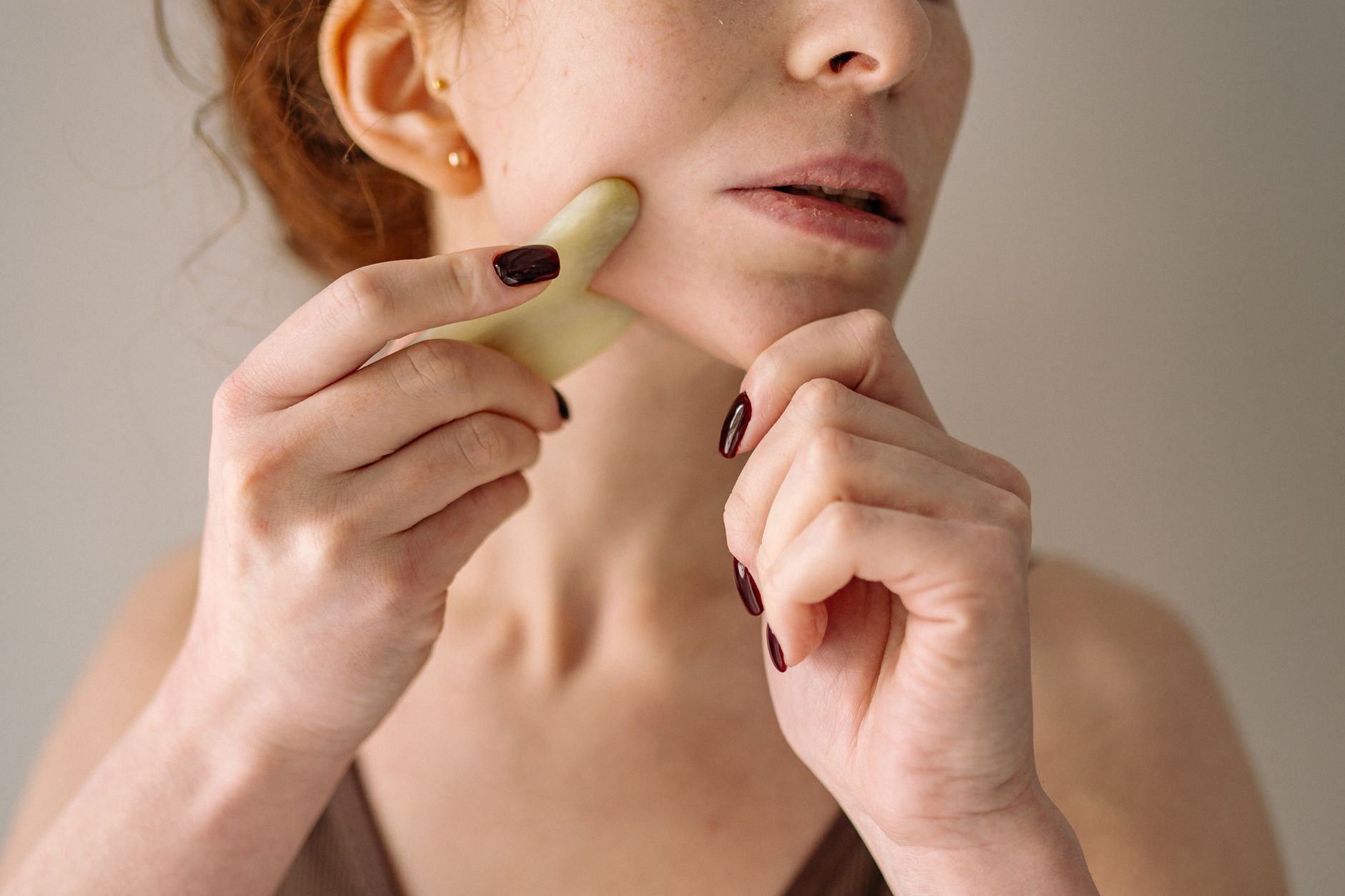
Gua Sha Facial Tool: How to Use It and What It Actually Does
Learn how to properly use a gua sha facial tool, what the practice can genuinely do for skin, and where its benefits are more modest than social media suggests.
How to Choose Sustainably Packaged Beauty Products
Learn how to identify genuinely sustainable beauty packaging, avoid greenwashing, and make more environmentally conscious beauty purchases.
How to Build a Travel-Friendly Beauty Routine
Learn how to build an effective, compact travel beauty routine, including product decanting, TSA rules, and maintaining consistency on the go.
Skincare Ingredients You Should Never Mix Together
Learn which skincare ingredient combinations to avoid, why they conflict, and how to layer active ingredients safely instead.