 Funky Millions
Hair Density vs. Hair Thickness: What's the Difference?
Hair density vs hair thickness: learn the real difference between these two commonly confused terms and how to identify and care for both.
Quick summary
Key Takeaways
- Hair density is about the number of strands on your head, not the thickness of each individual strand.
- Hair thickness describes the diameter of each individual strand, independent of how many total strands you have.
- The ponytail circumference test and scalp visibility test are the two most accessible ways to estimate hair density at home.
- Comparing a single hair strand to a sewing thread is a simple, accessible way to estimate whether your hair is fine, medium, or coarse.
- Understanding which of these four combinations describes your hair clarifies why generic "thick hair" or "thin hair" advice often does not fully apply to your specific situation.
- Both density and thickness meaningfully affect coloring and chemical service outcomes, with thickness primarily influencing processing time and formulation strength, and density primarily influencing product volume and application time.
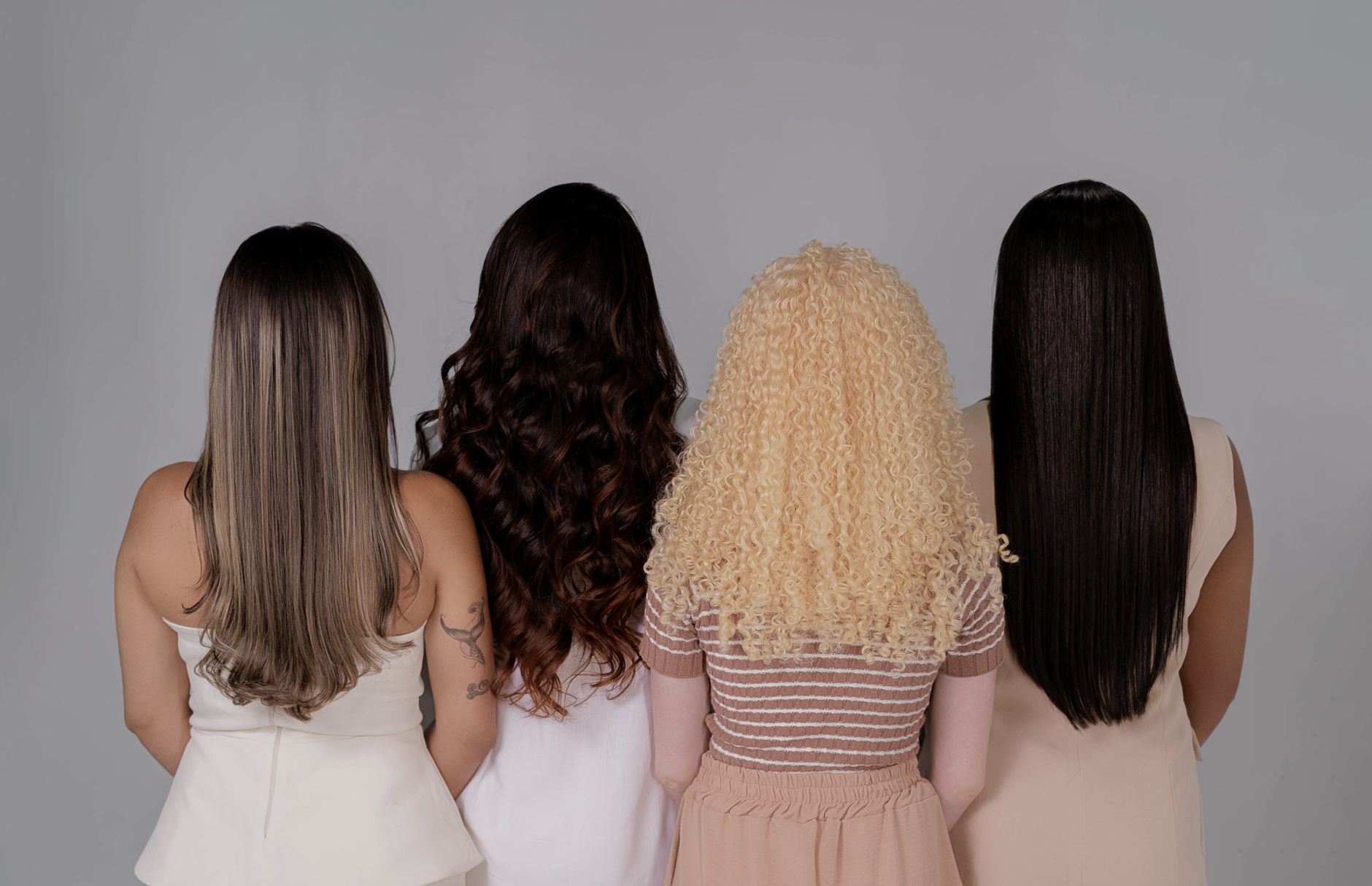
"My hair is so thick" and "I have a lot of hair" sound like they mean the same thing, but they actually describe two entirely different characteristics: density and thickness. Understanding hair density vs hair thickness helps you choose the right products and styling techniques, since a routine built for high density but fine thickness looks very different from one suited to low density but coarse thickness.
What Is Hair Density?
Hair density refers to how many individual hair strands you have per square inch of scalp. It is determined primarily by genetics and describes how "full" your hair looks overall, regardless of how thick or thin each individual strand is. Someone can have very high density (many strands) made up of fine, thin individual hairs, or low density (fewer strands) made up of thick, coarse individual hairs.
What Is Hair Thickness (Strand Diameter)?
Hair thickness, sometimes called strand diameter, refers to the width of each individual hair strand, typically categorized as fine, medium, or coarse. This is also largely genetically determined and is unrelated to how many total strands you have. A single coarse strand of hair is physically wider in diameter than a single fine strand, regardless of overall density.
Why These Two Get Confused
The confusion largely comes from everyday language, where "thick hair" is often used colloquially to describe hair that looks voluminous and full, which is actually a density characteristic, while "thin hair" often describes hair that looks flat or sparse, again more related to density than individual strand thickness. This casual usage obscures the fact that someone can have thin (fine) individual strands but high density, resulting in hair that looks quite full despite each strand being delicate.
How to Test Your Hair Density
Method 1: The Ponytail Test
Gather your hair into a ponytail and measure the circumference of the hair at the base.
- Under 2 inches: low density
- 2 to 3 inches: medium density
- Over 3 inches: high density
Method 2: The Scalp Visibility Test
Part your hair and look at how much scalp is visible.
- Scalp clearly visible through the part: lower density
- Little to no scalp visible: higher density
How to Test Your Hair Thickness
Method: The Single Strand Comparison
Take a single strand of your hair and compare it to a standard sewing thread.
- Strand is noticeably thinner than the thread: fine hair
- Strand is roughly similar in width to the thread: medium hair
- Strand is noticeably thicker than the thread: coarse hair
You can also assess thickness by how easily a strand breaks when gently pulled (fine hair breaks more easily) or how well it holds a curl (coarser hair often holds styles better due to its structural strength).
Hair Density vs. Hair Thickness Comparison Table
| Feature | Hair Density | Hair Thickness |
|---|---|---|
| What it measures | Number of strands per square inch | Diameter of each individual strand |
| Testing method | Ponytail circumference, scalp visibility | Single strand vs. thread comparison |
| Common categories | Low, medium, high | Fine, medium, coarse |
| Genetic determination | Yes, primarily genetic | Yes, primarily genetic |
| Affects volume perception | Yes, directly | Indirectly, through strand strength and texture |
| Affects product absorption | Somewhat (more strands = more product needed) | Yes, significantly (coarse hair often needs richer products) |
The Four Possible Combinations
High density + fine hair: Hair looks fuller due to strand count, but individual strands are delicate. Common styling challenge: avoiding product overload that weighs down fine strands despite the overall volume.
High density + coarse hair: Very full, voluminous hair overall. Common styling challenge: managing bulk and frizz, since both high strand count and thick individual strands contribute to volume.
Low density + fine hair: Hair can appear thin and flat overall. Common styling challenge: adding the appearance of volume without further weighing down already-delicate strands.
Low density + coarse hair: Fewer strands, but each one is substantial, sometimes creating a look that feels "thick" per-strand but lacks overall fullness. Common styling challenge: balancing styling products that suit coarse texture without needing volume-focused formulas.
Product Recommendations by Combination
| Combination | Product Focus |
|---|---|
| High density + fine | Lightweight, volumizing formulas; avoid heavy oils/butters |
| High density + coarse | Rich, moisturizing formulas; anti-frizz serums |
| Low density + fine | Volumizing, lightweight formulas; avoid weighing down hair |
| Low density + coarse | Moisturizing but not necessarily volumizing formulas |
Our guide on best hairstyles for thin hair to look thicker offers additional styling strategies particularly relevant for lower-density hair types.
Styling Considerations by Combination
Fine hair, regardless of density, tends to be more prone to breakage and requires gentler handling, lower heat settings, and lighter products to avoid looking greasy or flat. Coarse hair, regardless of density, generally tolerates higher heat settings and benefits from richer, more emollient products to manage its naturally drier tendency and to combat frizz.
Density, separately, affects how much product you need overall (higher density generally requires more product to adequately coat all strands) and how styling tools should be used (higher density hair may need to be styled in smaller sections to ensure even heat and product distribution).
How Density and Thickness Affect Hair Coloring and Chemical Services
Hair stylists frequently consider both density and thickness when planning coloring or chemical services, since these characteristics significantly affect processing time, product quantity needed, and the final result, even though clients rarely discuss them in these specific terms during a salon consultation.
For coloring services, higher density hair requires significantly more product volume to achieve even saturation and coverage, since there are simply more strands to coat. Coarse hair, regardless of density, often requires longer processing time for color to fully penetrate the thicker strand, and colorists frequently adjust developer strength or processing time specifically for coarse textures compared to fine ones. Fine hair, by contrast, often processes color more quickly and can be more prone to over-processing or damage if timing and product strength are not adjusted downward accordingly.
For chemical services like relaxing or perming, coarse hair generally requires stronger formulations or longer processing time to achieve the desired result, while fine hair typically needs gentler formulations to avoid over-processing and resulting damage. Density plays a secondary but still relevant role here, since higher density hair takes longer to saturate evenly with any chemical product, regardless of individual strand thickness.
Common Mistakes to Avoid
Using "Thick Hair" Products When You Actually Have High-Density Fine Hair
Products marketed for "thick hair" often assume coarse strand thickness, which can be too heavy for high-density hair made up of fine individual strands, weighing it down despite its overall fullness.
Assuming Low Density Always Means Fine Hair
Some people have low density but coarse individual strands, which requires a different product approach than the volumizing focus typically recommended for fine, low-density hair.
Chasing Volume Products When the Real Issue Is Product Weight
If your hair has good density but feels flat, the issue may be product buildup or overly heavy formulas rather than an inherent lack of volume-generating potential.
Ignoring Strand Thickness When Choosing Heat Styling Settings
Using the same heat setting regardless of whether your hair is fine or coarse can lead to unnecessary damage on fine strands or ineffective styling on coarse ones.
Density and Thickness Across Different Areas of the Same Head
Just as hair porosity can vary across different sections of the head, density in particular is rarely perfectly uniform from front to back. Many people have noticeably higher density at the crown and lower density near the hairline and temples, a pattern related to natural growth patterns rather than any styling or product issue. Being aware of this uneven distribution can prevent unnecessary concern about hairline density that is simply a normal variation rather than a sign of thinning.
Thickness, by contrast, tends to be more uniform across the scalp for most people, since strand diameter is more closely tied to overall genetic hair type than to specific follicle location. Noticing a meaningful difference in thickness between different areas of your head, rather than density, is somewhat less common and may be worth mentioning to a dermatologist if it appears alongside other changes, since localized thickness changes can occasionally indicate an underlying scalp or hormonal issue worth investigating.
- Test both density and thickness separately rather than assuming one based on general hair "fullness" impressions.
- Match product richness to strand thickness, not overall density, since coarse hair generally needs richer formulas regardless of how many strands you have.
- Match volumizing techniques to density, not thickness, since adding volume addresses a density concern, not a thickness one.
- Reassess periodically, since density can change somewhat with age or hormonal shifts, even though thickness tends to remain more stable throughout life.
Conclusion
Understanding hair density vs hair thickness clarifies why generic hair advice does not always work for your specific hair, since these two independent characteristics combine in different ways for different people. Testing both at home takes just a few minutes and can meaningfully improve your product and styling choices by matching them to your hair's actual structure rather than assumptions based on how "thick" or "thin" your hair appears at a glance.
For more on styling strategies for lower-density hair, see our guide on best hairstyles for thin hair to look thicker.
Category: Hair Care
Tags: hair density, hair thickness, strand diameter, fine hair, coarse hair, hair testing, hair care basics, hair volume, hair type, hair characteristics
Frequently Asked Questions
References
Last updated
This article is for informational purposes only and does not constitute medical advice. Consult a licensed dermatologist or healthcare provider before starting any new treatment.
Beauty & Hair Care Editor
Amanda Gurton is a beauty editor and researcher with a focus on translating dermatology and trichology insights into clear, actionable advice. She covers skincare routines, hair health, ingredient science, and everyday beauty habits.
Comments (0)
Be the first to comment.
Related Articles
Building a Hair Routine Around Porosity and Density Together
Learn how to build a hair care routine that accounts for both porosity and density together, with practical combinations and product strategies.
Scalp Buildup: Signs You Have It and How to Remove It
Learn the signs of scalp buildup, what causes it, and effective methods to safely remove product and oil buildup from your scalp.
How to Test Hair Elasticity and Why It Matters
Learn how to test your hair's elasticity at home, what the results mean, and how to improve elasticity for stronger, healthier hair.
Best Hairstyles for Thin Hair to Look Thicker
Discover flattering hairstyles for thin hair that create instant fullness. Learn expert cuts, styling tricks, and product tips to make fine strands look thicker today. *(155 characters)*