 Funky Millions
How to Build an Efficient Wash Day Routine for Curly Hair
Learn how to build an efficient, effective wash day routine for curly hair, from pre-poo to styling, without spending your entire day on it.
Quick summary
Key Takeaways
- Curly hair's structure inherently requires more detangling and styling attention, which is why wash day tends to take longer than for straighter hair types.
- Pre-poo is a helpful but optional step, and skipping it is a legitimate way to streamline wash day for those whose hair does not particularly need this extra protection.
- Deep conditioning remains an essential step for curly hair even in a streamlined routine, though it can be made more time-efficient by multitasking during the processing time.
- Detangling on wet, conditioner-coated hair, rather than dry hair, is both faster and gentler, making it one of the most impactful technique choices for an efficient wash day.
- A complete wash day routine can be organized into a logical sequence where processing times for one step overlap with active tasks for another, improving overall efficiency.
- Adjusting overall wash day frequency, supported by lighter refresh techniques between full sessions, can be just as impactful for managing total time investment as streamlining any single wash day routine.
- Having a pre-planned, abbreviated wash day routine ready for time-constrained periods like early parenthood, and a travel-specific strategy for trips away from home, helps maintain consistent hair care even when circumstances do not allow for your usual full routine.
Wash day has a notorious reputation in the curly hair community for taking hours, but an efficient, well-organized routine can deliver excellent results without consuming your entire day. This guide walks through a complete, streamlined wash day sequence, explaining the purpose of each step so you can adjust and skip steps that are not essential for your specific hair.
Why Curly Hair Wash Day Takes Longer
Curly and coily hair typically requires more steps than straighter hair types because of its structure: the natural curl pattern makes hair more prone to tangling, its shape makes it harder for scalp oils to distribute along the length, and definition-focused styling techniques (like scrunching or raking in product) simply take more hands-on time than a quick towel-dry and go routine.
Pre-Poo: Is It Necessary?
A pre-poo (pre-shampoo treatment, typically an oil or conditioner applied before cleansing) is optional, not mandatory, and its usefulness depends on your hair's needs. It can help protect hair from the potentially drying effects of shampoo and ease detangling before cleansing. If your hair does relatively well without this step, skipping it is a reasonable way to shorten your overall routine.
Cleansing Step
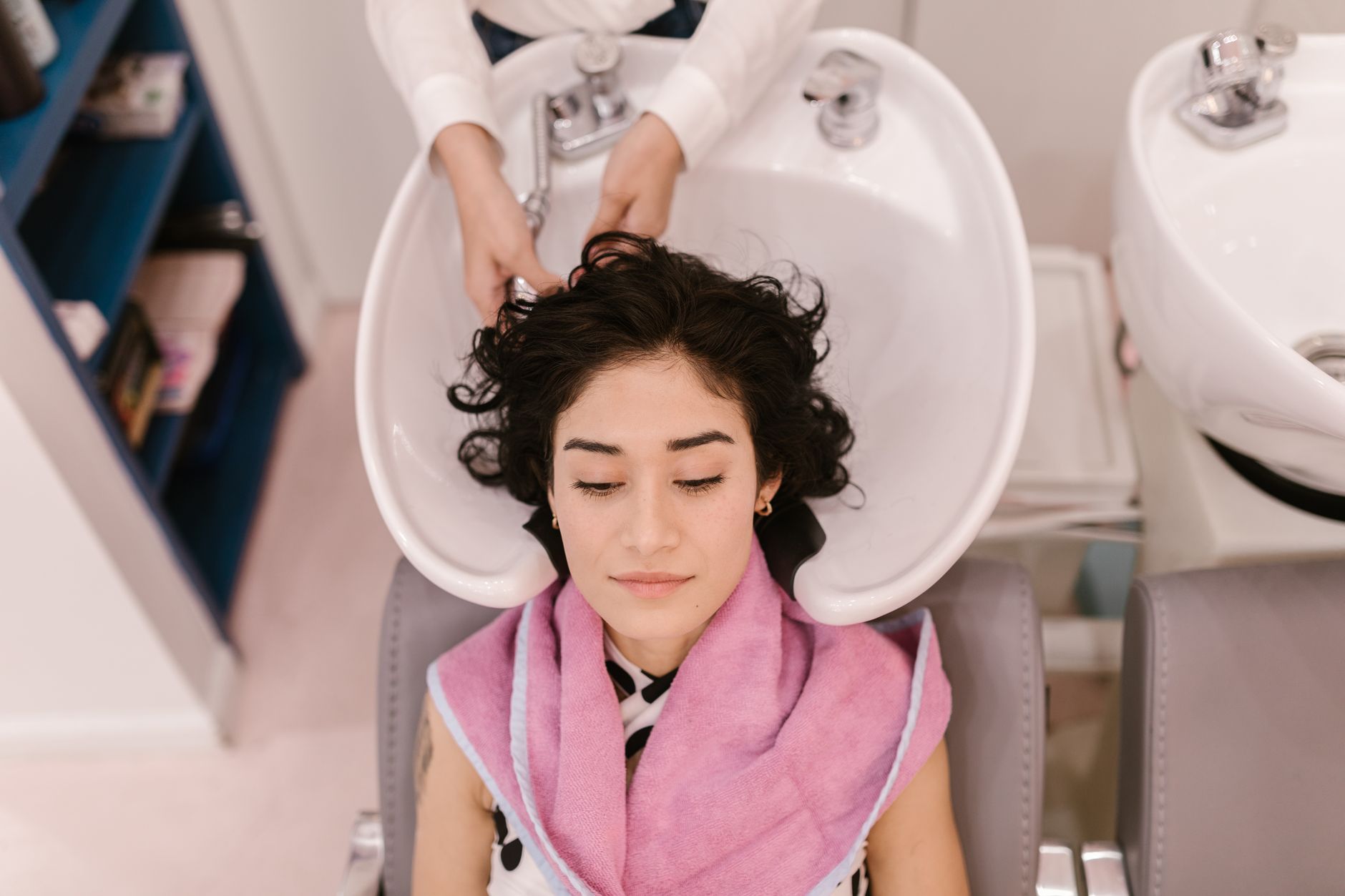
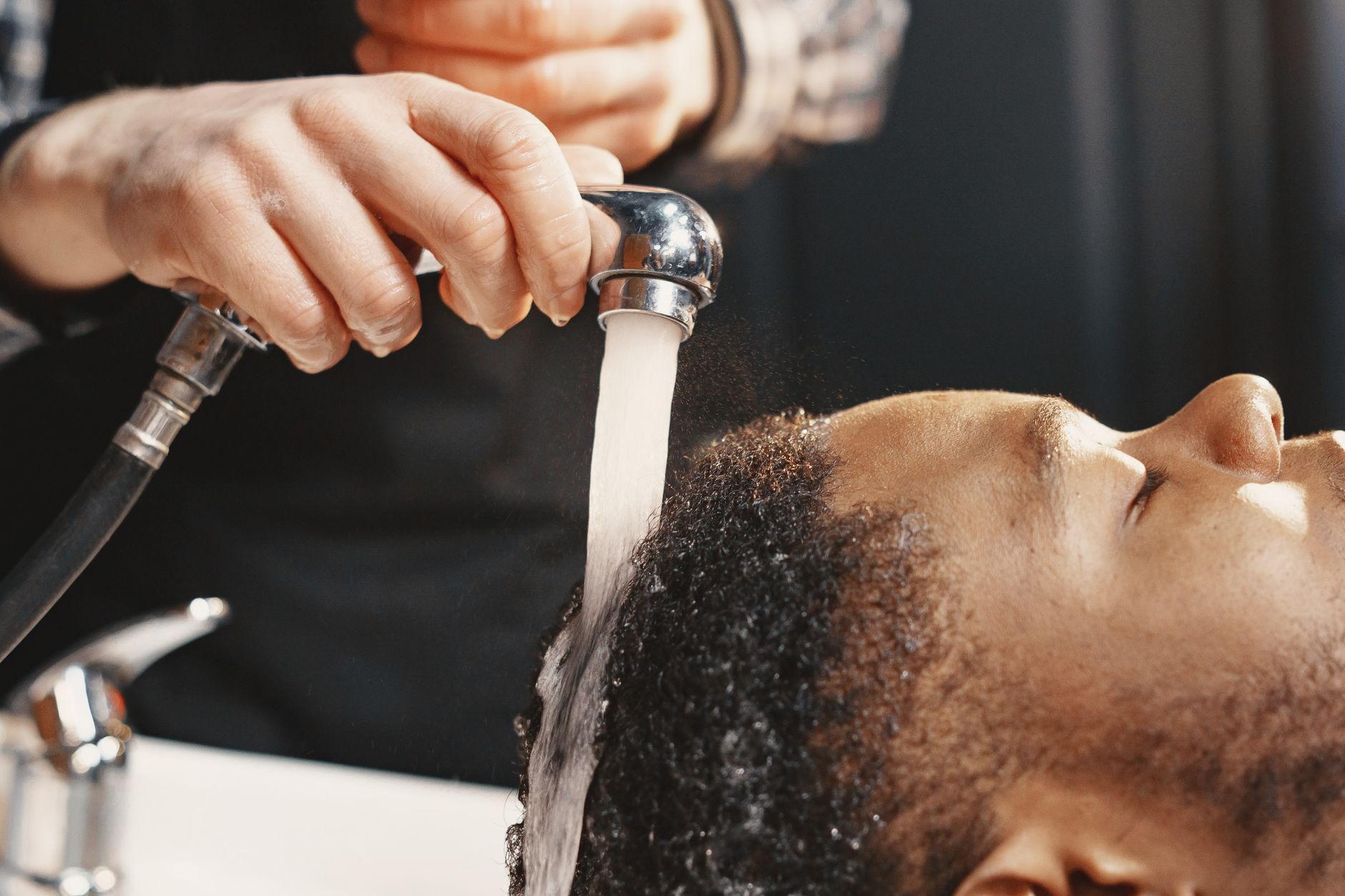
Whether using shampoo, co-wash, or a combination, focus cleansing primarily on the scalp, since this is where oil and product buildup actually accumulate, rather than aggressively scrubbing the length of your curls, which can increase tangling. Our guide on co-washing for curly hair covers this gentler cleansing alternative in more detail.
Deep Conditioning Step
Deep conditioning is one of the most valuable steps for curly hair, given its naturally drier tendency, and is generally not a step worth skipping even when trying to streamline your routine. Applying deep conditioner and letting it process while you handle other tasks (like showering or doing other parts of your routine) can make this step feel less time-consuming than it initially appears.
Detangling: When and How
Detangling curly hair is most effective when done on wet, conditioner-saturated hair, using fingers first to remove larger knots, followed by a wide-tooth comb if needed. Detangling dry hair or hair without adequate slip from conditioner significantly increases breakage risk and takes considerably longer.
Leave-In and Styling Products
Applying leave-in conditioner and styling products to soaking wet, rather than towel-dried, hair allows for more even distribution and can reduce the total amount of product needed, since wet hair helps products glide and spread more efficiently. Our guide on leave-in conditioner covers this foundational styling step in more depth.
Drying Methods
| Method | Time Investment | Best For |
|---|---|---|
| Air-drying | Longest passive time, minimal active effort | Those with flexible schedules, avoiding heat |
| Diffusing | Moderate active time | Faster drying with defined curls |
| Plopping | Adds a step but can reduce overall dry time | Reducing frizz, supporting curl clumping |
Diffusing generally offers the best balance of speed and curl definition for those wanting to shorten total wash day time without sacrificing results.
Full Sample Wash Day Routine
- Detangle dry hair lightly (optional, if very tangled) with fingers or a wide-tooth comb
- Apply pre-poo (optional) and let sit for 15-20 minutes
- Cleanse, focusing on the scalp
- Apply deep conditioner, detangle while it processes, let sit 15-20 minutes
- Rinse (fully or partially, depending on preference for "squish to condish" techniques)
- Apply leave-in conditioner to soaking wet hair
- Apply styling products (creams, gels) using your preferred technique (raking, scrunching, praying hands)
- Plop (optional) for 10-20 minutes
- Diffuse or air-dry
How to Make Wash Day More Efficient
- Skip optional steps (pre-poo, plopping) on days when time is limited, reserving them for when you have more flexibility
- Multitask during processing times, using deep conditioning time to shower or handle other tasks
- Pre-section hair before starting, which can make product application and detangling faster and more thorough
- Use a diffuser to reduce drying time compared to full air-drying
Comparison Table: Full Routine vs. Streamlined Routine
| Step | Full Routine | Streamlined Routine |
|---|---|---|
| Pre-poo | Included | Skipped |
| Deep conditioning | Included, full processing time | Included, shortened or multitasked |
| Detangling | Thorough, multiple passes | Focused, efficient single pass |
| Plopping | Included | Skipped or shortened |
| Drying | Air-dry (longest) | Diffuse (faster) |
| Total time | 2-4+ hours | 45 minutes-1.5 hours |
Adjusting Wash Day Frequency for Your Lifestyle
While this guide focuses on making each individual wash day more efficient, the frequency of wash days themselves is an equally important, often overlooked lever for managing the total time curly hair care demands across a given week or month.
Weekly wash days remain the most common pattern within the curly hair community, offering a predictable rhythm that balances adequate cleansing and deep conditioning against the time investment each session requires. However, extending to a ten-day or two-week cycle, supported by lighter refresh techniques between full wash sessions, works well for many people, particularly those with lower-porosity hair that does not accumulate buildup as quickly, or those simply needing to reduce the total time curly hair care takes across their schedule.
Refresh techniques between full wash days, such as a light misting of water and leave-in conditioner combined with finger-detangling and re-scrunching product into place, can extend the life of a style without requiring a full wash day repeat, effectively front-loading more of your time investment into fewer, more thorough sessions rather than spreading shorter sessions across more days. Finding the right balance between wash frequency and refresh technique is highly individual, depending on scalp oil production, activity level, and how well your specific curl pattern holds up between washes.
Common Mistakes to Avoid
Detangling Dry Hair
This significantly increases breakage risk and takes longer than detangling wet, conditioner-saturated hair.
Skipping Deep Conditioning to Save Time
While other steps are reasonably optional, deep conditioning provides significant benefit for curly hair's naturally drier tendency and is generally not the best step to cut when trying to shorten wash day.
Rushing Product Application
Applying styling products too quickly, without adequate distribution, often leads to uneven curl definition and can require more product overall to compensate.
Not Adjusting the Routine Based on Your Specific Hair's Needs
Following someone else's exact wash day routine without adjusting for your own hair's porosity, density, and specific concerns can mean unnecessarily long routines or missing steps your hair actually needs.
Adapting Wash Day for Different Life Circumstances
A wash day routine that works well during a typical week often needs meaningful adjustment during specific life circumstances, and having a shortened backup version ready in advance prevents these situations from derailing hair care entirely.
For new parents managing significantly reduced free time, an abbreviated routine focusing exclusively on cleansing, a shortened deep conditioning session, and simplified single-product styling, skipping pre-poo, plopping, and multi-product layering entirely, can maintain reasonable hair health during a period when a full multi-hour routine simply is not realistic. Having this shortened version already planned and practiced, rather than improvised in the moment, makes it far more likely to actually happen consistently during genuinely time-constrained periods.
For travel, particularly to destinations with different water quality or humidity than home, packing a minimal but complete set of travel-size products covering cleansing, conditioning, and styling ensures wash day remains possible even away from your usual bathroom setup and product collection. Some curly-haired travelers also plan wash days around travel itself, doing a full wash immediately before departure so that only lighter refresh techniques are needed during a shorter trip, avoiding the need to travel with a full product lineup at all.
- Identify which steps genuinely benefit your hair and which are optional extras you can skip when time is limited.
- Multitask during processing times to make the overall routine feel shorter, even if total product processing time remains similar.
- Invest in a diffuser if drying time is your biggest time constraint.
- Pre-section your hair before starting to make product application faster and more even.
Conclusion
An efficient wash day routine for curly hair does not require sacrificing results, understanding which steps are essential (like deep conditioning) versus optional (like pre-poo and plopping) allows you to streamline your routine based on your available time without compromising your hair's health or curl definition. Adjusting technique, like detangling wet hair and multitasking during processing times, can meaningfully shorten your overall time investment.
For more on the foundational products used throughout wash day, see our guides on leave-in conditioner and co-washing for curly hair, both of which fit naturally into the streamlined approach outlined here.
Category: Hair Care
Tags: wash day routine, curly hair care, deep conditioning, detangling, leave-in conditioner, diffusing, curly hair styling, hair care efficiency, curl definition, plopping technique
Frequently Asked Questions
References
Last updated
This article is for informational purposes only and does not constitute medical advice. Consult a licensed dermatologist or healthcare provider before starting any new treatment.
Beauty & Hair Care Editor
Ilma is a beauty editor who specializes in breaking down cosmetic ingredients, skincare routines, and hair care practices. Her work focuses on evidence-based guidance readers can trust and apply.
Comments (0)
Be the first to comment.
Related Articles
Leave-In Conditioner 101: How and When to Use It
Learn what leave-in conditioner does, how it differs from regular conditioner, and how to use it correctly for your hair type.
Best Products for Each Hair Porosity Type
Find the best hair products for low, medium, and high porosity hair, with specific ingredient recommendations and application tips for each type.
How to Care for High Porosity Hair: A Complete Guide
Master high porosity hair care with this expert guide. Learn the best routines, ingredients, products, and mistakes to avoid for stronger, healthier hair.
Co-Washing for Curly Hair: A Beginner's Guide
Learn what co-washing is, whether it's right for your curly hair, and how to co-wash correctly without buildup or scalp issues.