 Funky Millions
How Heat Protectant Actually Works (and When It Fails)
Learn how heat protectant actually works at a chemical level, its real limitations, and how to use it correctly to prevent heat damage.
Quick summary
Key Takeaways
- Heat protectant reduces heat damage through a physical barrier and heat redistribution, but it does not make hair fully immune to damage from styling tools.
- Silicones and heat-activated polymers form a barrier that raises hair's damage threshold, but this protection has real limits, particularly at high heat settings.
- Heat protectant provides meaningful but not unlimited protection, with its effectiveness decreasing significantly at very high styling temperatures.
- Heat protectant is most likely to fail when used in insufficient quantity, at excessively high temperatures, or on hair that is already significantly damaged.
- Even distribution, appropriate heat settings, and reapplication during long sessions all matter as much as simply using a heat protectant product at all.
- A styling tool's displayed temperature is only part of the story; contact time, repeated passes, and tool consistency all affect the actual heat stress hair experiences, meaning heat protectant's effective temperature range should be treated as a guideline rather than an exact safety threshold.
- Chemically processed hair benefits from both a reduced heat styling temperature and a heat protectant formula that addresses internal structural support, not just the external barrier that standard heat protectants provide.
Heat protectant has become a near-universal recommendation before using any hot styling tool, but many people apply it without understanding what it actually does, how much protection it really provides, and the situations where it can fail to prevent damage despite being used correctly. This guide breaks down the real chemistry behind heat protectants and the limits of what they can realistically do.
What Heat Protectant Actually Does
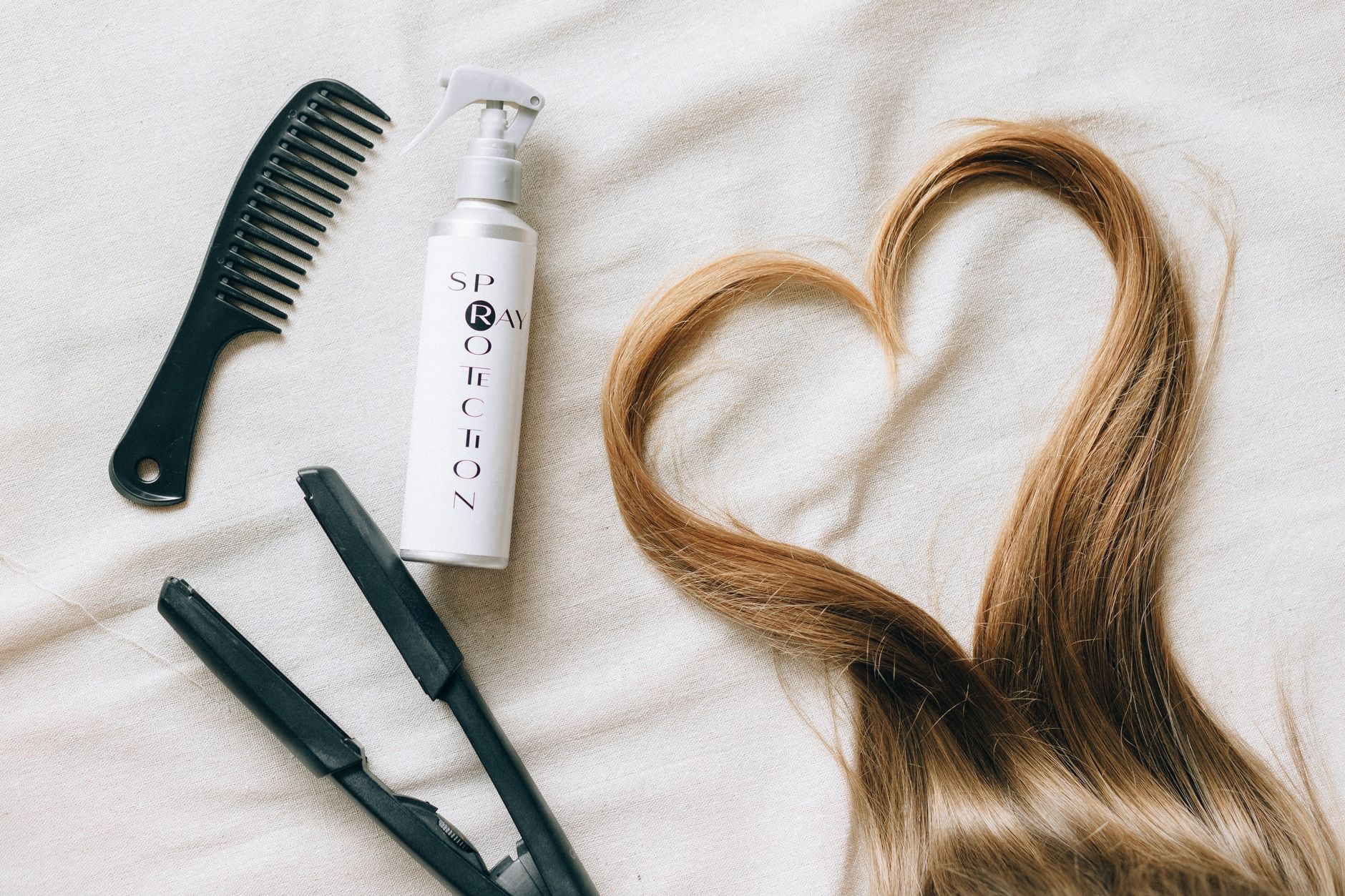
Heat protectant products work primarily through two mechanisms: forming a physical barrier that reduces direct contact between the styling tool and the hair shaft, and containing ingredients (often silicones or polymers) that can help redistribute heat more evenly across the hair's surface, reducing localized hot spots that cause the most severe damage. Heat protectant does not make hair immune to heat damage, it reduces the severity and likelihood of damage within a certain temperature and exposure range.
The Chemistry Behind Heat Protection
Most heat protectants rely on silicones (like dimethicone or cyclomethicone) or heat-activated polymers that coat the hair shaft, creating a barrier layer. Some formulas also include humectants and antioxidants that help offset some of the moisture loss and oxidative stress associated with heat exposure. The barrier these ingredients form can raise the temperature threshold at which hair begins to sustain damage, though this threshold varies by formula and does not eliminate damage risk at very high heat settings.
How Much Protection Heat Protectant Really Provides
Research and industry testing suggest well-formulated heat protectants can meaningfully reduce moisture loss and protein damage compared to using no protection at all, particularly at moderate heat settings (300-350°F). However, at very high temperatures (above 400°F), the protective effect diminishes significantly, and even the best heat protectant cannot fully prevent damage from prolonged or repeated exposure at these extreme settings.
Types of Heat Protectant Formulas
| Format | Best For | Application Notes |
|---|---|---|
| Spray | All hair types, easy even distribution | Apply to damp or dry hair depending on product instructions |
| Cream/lotion | Thicker, coarser, or curly hair | Apply to damp hair, distribute evenly through sections |
| Serum/oil-based | Fine hair needing lightweight protection | Use sparingly to avoid weighing down fine strands |
| Leave-in conditioner with heat protection | Those wanting a combined moisture and protection step | Check that it specifically states heat protection, not just leave-in conditioning |
When Heat Protectant Fails
- Using too little product to adequately coat all sections of hair
- Styling at temperatures higher than the product is rated for
- Applying to already-damaged, over-porous hair, which may not hold the protective barrier as effectively
- Skipping reapplication during a long styling session involving multiple passes with a hot tool
- Using a heat protectant with silicones on hair that has significant product buildup, which can prevent even distribution of the protective layer
Heat Protectant Comparison Table
| Feature | With Heat Protectant | Without Heat Protectant |
|---|---|---|
| Moisture loss during styling | Reduced | Higher |
| Protein/structural damage risk | Lower, especially at moderate heat | Higher |
| Effectiveness at very high heat | Reduced but present | N/A (no protection) |
| Cumulative damage over time | Slower accumulation | Faster accumulation |
How to Apply Heat Protectant Correctly
Step 1: Apply to Clean, Towel-Dried Hair
Apply heat protectant evenly to clean, towel-dried (not soaking wet) hair for most spray and cream formulas, following your specific product's instructions.
Step 2: Distribute Through Sections
Divide hair into sections and ensure even coverage from roots to ends, paying particular attention to ends, which tend to be more porous and damage-prone.
Step 3: Allow Time to Set (If Applicable)
Some formulas benefit from a brief period to activate or partially dry before heat styling begins.
Step 4: Use an Appropriate Heat Setting
Even with heat protectant, choosing the lowest effective temperature for your hair type and desired style reduces overall damage risk.
Step 5: Reapply for Extended Styling Sessions
If styling takes an extended period or involves multiple passes, especially on the same section, consider a light reapplication partway through.
Heat Protectant Myths
Myth: Heat protectant makes any temperature safe. Reality: protection has real limits, and very high temperatures can still cause damage even with heat protectant applied.
Myth: More product means more protection. Reality: excessive product can weigh hair down and does not proportionally increase protection beyond adequate, even coverage.
Myth: Natural oils alone provide the same protection as formulated heat protectants. Reality: while some oils offer modest protective benefit, dedicated heat protectant formulas with silicones or heat-activated polymers are generally more effective at the barrier-forming mechanism specific to heat protection.
Myth: You don't need heat protectant if you rarely use hot tools. Reality: even occasional heat styling benefits from protection, since damage can occur from a single high-heat session, not just cumulative frequent use.
Choosing the Right Heat Protectant for Your Hair
| Hair Type | Recommended Format |
|---|---|
| Fine hair | Lightweight spray or serum, used sparingly |
| Thick/coarse hair | Cream or lotion formula for thorough coverage |
| Curly hair | Cream-based, often combined with a styling product |
| Color-treated hair | Formulas with added antioxidants or bond-supporting ingredients |
| Chemically relaxed hair | Rich cream formula, given the already-compromised bond structure |
Why Tool Temperature Displays Can Be Misleading
Many modern styling tools display a specific temperature setting, which can create a false sense of precision and safety when paired with heat protectant. Understanding why this displayed number does not tell the whole story helps set more realistic expectations about actual damage risk.
The displayed temperature on most styling tools reflects the plate or barrel's target setting, not necessarily the exact temperature being transferred to your hair at any given moment, which depends on contact time, pressure applied, and how many times a section is passed over. A tool set to 350°F but held against a section of hair for an extended period, or passed over the same section repeatedly, can effectively deliver more cumulative heat stress than a quick pass at a higher displayed temperature, even though the number on the display suggests otherwise.
Additionally, not all tools maintain consistent temperature throughout a styling session, some fluctuate as they cycle on and off to maintain their target setting, and cheaper tools in particular may have less accurate or consistent heating elements than their displayed number suggests. This is part of why two people using tools set to the identical displayed temperature can experience quite different amounts of actual heat damage, since technique, tool quality, and contact time all factor into the real-world heat exposure hair receives.
Common Mistakes to Avoid
Skipping Heat Protectant for "Quick" Styling Sessions
Even brief heat exposure at high temperatures can cause damage, making heat protectant relevant regardless of how quickly you plan to style.
Applying Unevenly
Missing sections, particularly ends, leaves those areas unprotected and more vulnerable to damage.
Assuming All Heat Protectants Work Identically Regardless of Temperature Rating
Check your product's stated maximum effective temperature and try to keep your styling tool within that range when possible.
Not Adjusting Heat Settings Because "I'm Using Protectant Anyway"
Heat protectant reduces, but does not eliminate, damage risk, meaning temperature choice still matters significantly.
Heat Protectant and Hair Already Compromised by Color or Chemical Treatment
Chemically processed hair presents a specific challenge for heat protection that deserves separate consideration, since the same styling temperature that a healthy strand tolerates reasonably well can cause disproportionate damage to hair whose internal bonds have already been weakened by coloring, bleaching, or relaxing.
Heat protectant's barrier-forming mechanism still functions on chemically treated hair, but the hair underneath that barrier has less structural reserve to begin with, meaning the same degree of heat exposure that a healthy strand would shrug off can push already-compromised hair past a damage threshold more easily. This is why many stylists recommend reducing heat styling temperature specifically for recently colored or lightened hair, even with heat protectant applied, rather than relying on the product alone to fully offset the combined stress of chemical processing and heat.
For hair that has undergone significant chemical processing, choosing a heat protectant formula that also contains bond-supporting or protein ingredients, rather than a purely silicone-based barrier formula, can offer a more complete approach, addressing both the external heat barrier and some of the internal structural vulnerability simultaneously.
- Match heat protectant format to your hair type for the most even, effective coverage.
- Choose the lowest effective heat setting for your desired style, even when using heat protectant.
- Reapply during long styling sessions, particularly if going over the same section multiple times.
- Combine with regular deep conditioning to support overall hair health alongside heat protection specifically.
Conclusion
Understanding how heat protectant actually works, forming a protective barrier and helping redistribute heat, clarifies both its real value and its limits. It significantly reduces damage risk, particularly at moderate heat settings, but it is not a guarantee against damage at very high temperatures or with insufficient, uneven application. Choosing the right formula for your hair type, applying it thoroughly, and pairing it with sensible heat settings together offer the most effective protection.
For broader strategies on maintaining healthy hair, see our guide on healthy hair care routine.
Category: Hair Care
Tags: heat protectant, heat styling damage, hair protection, silicones, flat iron damage, curling iron damage, hair care basics, heat styling tips, hair barrier, styling temperature
Frequently Asked Questions
References
Last updated
This article is for informational purposes only and does not constitute medical advice. Consult a licensed dermatologist or healthcare provider before starting any new treatment.
Beauty & Hair Care Editor
Amanda Gurton is a beauty editor and researcher with a focus on translating dermatology and trichology insights into clear, actionable advice. She covers skincare routines, hair health, ingredient science, and everyday beauty habits.
Comments (0)
Be the first to comment.
Related Articles
Sulfate-Free Shampoo: Who Actually Needs It?
Learn what sulfate-free shampoo actually means, the real pros and cons, and whether switching is genuinely necessary for your hair type.
Silicone-Free Haircare: What It Means and Who Needs It
Learn what silicone-free haircare means, why some people avoid silicones, and whether switching is right for your hair type.
Scalp Buildup: Signs You Have It and How to Remove It
Learn the signs of scalp buildup, what causes it, and effective methods to safely remove product and oil buildup from your scalp.
Leave-In Conditioner 101: How and When to Use It
Learn what leave-in conditioner does, how it differs from regular conditioner, and how to use it correctly for your hair type.