 Funky Millions
How to Get Rid of Itchy Scalp
Quick summary
Key Takeaways
- Natural remedies such as tea tree oil, aloe vera, lemon, baking soda, apple cider vinegar, and coconut oil can soothe an itchy scalp when used consistently and properly diluted.
- Scratching damages the scalp barrier and can worsen irritation, so use gentle pressure or cool compresses instead of nails.
- Good hygiene, a balanced diet, adequate hydration, and stress management help prevent itch from returning.
- See a dermatologist if the itch persists beyond a few weeks, spreads, or is accompanied by redness, pus, scaling, or patchy hair loss.
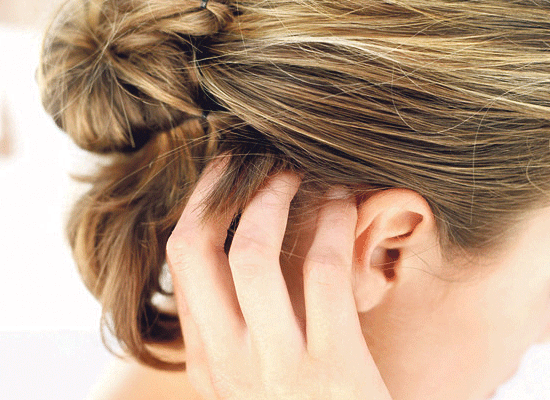
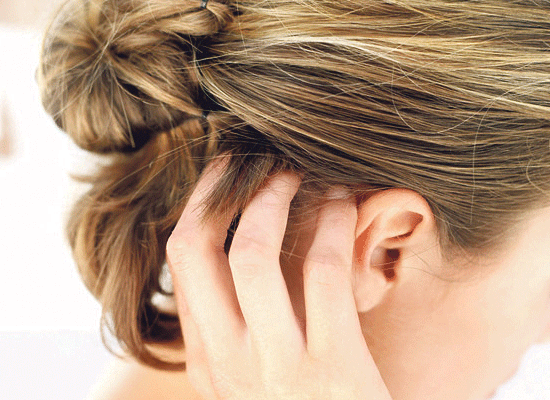
Scratching hair in places where people are many feels quite embarrassing as it comes with adverse effects. An itchy scalp can make an individual to lose his/her confidence and respect. This will definitely make one feel uncomfortable and might make him/her afraid to face other people. Most people fail to know the reason behind itchiness, well, it is as a result of a range of factors; for instance, poor hair care, dry scalp, fungus, imbalanced diet, viral infections, dandruff to mention but a few. Below are points that illustrate remedies for itchy scalp
How to get rid of Itchy scalp
- The constituents of tea tree oil are natural antifungal, antibacterial properties as well as anti-inflammatory that have successfully worked in treating itchy scalp. Well, the oil must be applied on a daily basis for better results. Research shows that this remedy can be effective after a period of two to three weeks. The processes are as easy as mixing two drops of the tea tree oil with vegetable oil and use the mixture to massage. One can also consider putting ten to twenty drops of tea tree oil in a half-cup baby shampoo and use to clean the scalp on a daily basis until the itches heal.
- Did you know that aloe Vera can also be used as an itchy scalp remedy? Well, it has outstanding healing ability since research has it that aloe Vera can heal up to forty diseases. Since it feels bitter in the mouth, one can easily grind a piece of aloe vera, obtain its juice, mix with eggs and apply the mixture on the affected parts. After rubbing the mixture on the scalp, wait for ten to two minutes and wash the head with hair shampoo and later rinse it with cold water. Other than rubbing, one can alos drink it and let the disease be healed first from inside which is the best because it wont reappear again.
- Itchy scalp can also be corrected through using lemon fruit. It can be applied directly by rubbing the lemon fruit on the affected parts by cutting it it two and letting the juice penetrate the pores to heal the scalp. This is mainly because lemon fruit has antiseptic properties that will stop the itches without hesitation. After applying the juice, wash the head using hair shampoo and conditioner and rinse it with clean cold water to refresh the head. Afterwards, massage it gently to enhance circulation. This activity should be repeated for a period of two to three days.
- Did you know that imbalanced diet also causes scalp to itch? Well, research shows that a well balanced diet will not only help the body to achieve that healthy look, but, a healthy look is also achieved when the hair is smart and clean. For instance, it is vital to drink a lot of water as well as eating a lot of fruits that will prevent instances of itchy scalp.
- Baking soda has also been since used as one of the best remedies for itchy scalp. Other than its ability to stop itchy scalp, it is also a readily available ingredient that exfoliates the scalp thus preventing fungi from overreacting thus causing dandruff. It can be used in several ways, for instance, mixing it with water, applying directly on the scalp, wait for ten to twenty minutes then clean the scalp using mild shampoo. To achieve best results, it is advisable that one applies olive oil on the scalp prior to applying the baking soda mixture. Another way of using baking soda paste is through soaking it directly onto the skin, waits for ten to twenty minutes for the reaction to take place then rinse using clean water. In order for this process to be effective, it should be done repeatedly until the itching stops.
- How about using vinegar that contains powerful anti-inflammatory properties? Well, vinegar can get rid of yeast that develops into itchy scalp and it vinegar is used for a period of time, its seizes itching scalp. Moreover, other than killing the virus, vinegar is basic thus balances PH levels of scalp thus relieving it from itching. Even though most people find it difficult to find cider vinegar, it is one of the best ways of dealing with itchy scalp. This process takes place in the illustrated procedure:
- Rinse the scalp with clean water and allow it to dry
- Mix water and an equal amount of apple cider vinegar, using a spare bottle, spray the scalp thoroughly using the cotton balls.
- Clean the scalp using a mild shampoo and rinse using clean water after ten to twenty minutes.
- The remedy should be repeated on a daily basis until the itchiness stops.
- One of the best remedies for itchy scalp that most people have looked down upon is observing cleanliness. It is vital to clean the hair using appropriate hair shampoo on a weekly basis and treat it using hair conditioner. After that, oil the hair using the available hair food and avoid staying with the same hair style for long periods of time as this will lead to scalp dryness thus causing scalp itchiness. Even though most people find it costly to clean their hair, just like the body skin, the scalp also needs to be taken care of in order to look healthy, giving it food, oiling is therefore an obligation that should be seriously be considered.
- Moisturizing the scalp using coconut oil is also another remedy for itchy scalp. This is because coconut acts as a barrier between healthy and dry skin. For one to get best results it is advisable that the scalp should be cleaned using recommended shampoo or a mild soap then later rinse using clean water. The remedy should be repeated on a daily basis for three to four weeks. One can also melt the coconut oil and mix it with a shampoo which in turn is used to clean the hair or scalp. This is a very easy process of stopping itchiness that should also be repeated on a daily basis for three weeks.
Why scratching makes an itchy scalp worse
It is tempting to dig your nails into a flaky, irritated scalp, but repeated scratching often prolongs the problem. Every scrape creates tiny breaks in the skin barrier that let bacteria and fungi move in more easily, which can turn a simple itch into inflammation, scabs, or even a temporary patch of hair loss. Scratching also triggers the release of histamine and other itch mediators, so the brief relief is usually followed by a stronger urge to scratch again. Instead of using nails, press the flat of your fingers against the spot for a few seconds, or apply a cool, damp cloth to reduce the sensation without breaking the skin.
When an itchy scalp may need more than home care
Most cases of scalp itch respond to the remedies above within two to four weeks, yet some warning signs deserve a closer look. Persistent redness, thick silvery scales, pus-filled bumps, swollen lymph nodes, or sudden shedding in round patches can point to conditions such as psoriasis, folliculitis, tinea capitis, or alopecia areata. An itch that wakes you at night, spreads to the eyebrows or beard, or appears soon after starting a new dye or relaxer may signal an allergic contact dermatitis. In these situations, a dermatologist can perform a scalp examination, a scraping for fungus, or patch testing to identify the exact trigger and prescribe targeted treatment rather than trial-and-error home care.
How to keep the itch from coming back
Prevention is easier than repeated treatment. Wash the scalp regularly with a shampoo suited to your hair type and scalp condition, and rinse thoroughly so residue does not sit on the skin. Rotate active-ingredient shampoos rather than using the same formula every single wash, especially if you rely on tea tree oil or antifungal options. Keep combs, brushes, pillowcases, and hats clean, and avoid sharing them, since fungal spores can travel between people. Protect the scalp from excessive sun and very hot water, both of which strip natural oils, and manage stress through sleep and movement, because stress flares many inflammatory scalp conditions. If you wear protective styles, leave the scalp accessible for light oiling and washing rather than pulling the hair so tight that tension itself causes itching.
For related advice, see [Best Hairstyles for Every Hair Type](/best-hairstyles-for-every-hair-type), [Causes of Hair Loss in Women](/causes-of-hair-loss-in-women) and [Coconut Oil Hair Treatment](/coconut-oil-hair-treatment).
Dermatologists commonly recommend starting with gentle scalp care and identifying the underlying cause of itching rather than masking it with heavy oils or frequent scratching. They often advise patients to choose shampoos based on whether the scalp is oily, dry, or flaky, and to introduce one new treatment at a time so reactions can be spotted easily. For stubborn or recurrent symptoms, a professional evaluation is the safest way to rule out fungal infection, psoriasis, or allergic contact dermatitis and to receive a treatment plan tailored to the specific condition.
Conclusion
Getting rid of an itchy scalp is usually a matter of identifying the trigger and sticking with a gentle, consistent routine. Natural options such as tea tree oil, aloe vera, lemon, baking soda, apple cider vinegar, and coconut oil can calm irritation and restore balance, while better hygiene, hydration, and nutrition help prevent the problem from returning. Patience matters: most remedies need several days to a few weeks before the scalp feels comfortable again.
If home care does not bring relief, or if the scalp shows signs of infection, significant scaling, or hair loss, it is sensible to see a dermatologist for a proper diagnosis and treatment plan. A healthy scalp is the foundation of healthy hair, so caring for it is worth the extra attention.
Frequently Asked Questions
Last updated
This article is for informational purposes only and does not constitute medical advice. Consult a licensed dermatologist or healthcare provider before starting any new treatment.
Beauty & Hair Care Editor
Amanda Gurton is a beauty editor and researcher with a focus on translating dermatology and trichology insights into clear, actionable advice. She covers skincare routines, hair health, ingredient science, and everyday beauty habits.
Comments (0)
Be the first to comment.
Related Articles
Scalp Buildup: Signs You Have It and How to Remove It
Learn the signs of scalp buildup, what causes it, and effective methods to safely remove product and oil buildup from your scalp.

Protective Hairstyles That Prevent Heat and Manipulation Damage
Discover protective hairstyles that reduce heat and manipulation damage, plus tips for maintaining hair health while wearing them.
Keratin Treatments: Pros, Cons, and What to Expect
Learn how keratin treatments work, the real pros and cons, what to expect during and after, and whether it's right for your hair.
Leave-In Conditioner 101: How and When to Use It
Learn what leave-in conditioner does, how it differs from regular conditioner, and how to use it correctly for your hair type.