 Funky Millions
Protective Styles for Natural Hair
Quick summary
Key Takeaways
- Match the protective style to your natural texture and strand thickness to avoid unnecessary tension.
- Sleep on satin or silk to reduce friction and preserve moisture while wearing a protective style.
- Keep protective styles in for two to six weeks and remove them gently to prevent matting and breakage.
- Hydrate the hair beneath the style with water-based moisture and light oils rather than heavy products.
Protective Styles for Natural Hair
Protective styles are essentially the styles which protect your hair from further damage because of the styling. Least amount of chemical products and electronic gadgets are used. The ends are tucked away neatly and are not subjected to any harm. These hair styles look natural, cute and are easy to make at home once you get to know the right method. Following are some tips that will help you protect your hair.
- Before hair styling, make sure that the roots are well moisturized and combed smoothly. This will avoid any kind of tangles that could take place. Olive oil or olive gel is the best. They contain natural minerals that help nourish your hair. Or you can use any natural oil that suits your hair type.
- Keeping your hair moisturized does not certainly mean that you have to use a lot of chemical products. Avoid using bleach and a lot of hair spray, wax or moose. These products make your hair look beautiful for a while, but snatch away the necessary nutrients from the hair.
- Comb your hair starting from the ends and moving gradually upwards. Always use a gentle, steady hand. Being rough and rude to your hair will cause it more damage. Use a hair brush or comb that does not have very sharp ends. This will injure your scalp and can give way to infections.
- Avoid using a lot of electronic devices like straightening iron or a curler; even a blow dryer, on your hair. The excessive heat kills the useful protein in your hair and as a result, split ends and damaged roots occur. Ironing, curling and perming should be restricted to rare occasions. Don’t make it a habit.
- Even if you have to use some hair product like a spray, etc. try to wash your hair as soon as possible so that it does not stay in contact with your hair longer than needed.
Best Protective Styles for Natural Hair
Hair styling does not necessarily damage the hair. It is a myth. If you style and fashion your hair wisely, you will not only look good, but also protect your hair against any kind of ruin. The first awareness you need to have is the hair fashion that well suits not only your personality, but also your face cut. There are a number of easy manners in which you can do your hair at home.
Tips To Note
- A high bun is not only easy, but also very convenient. It suits the long curly hair the most which can sometimes be a hassle to take care of. Wrapping your hair in a bun will make you look stylish for this is the new trend this season. Make sure that the sides are not stretched, but loose so that the roots of the hair are not pulled out. Even if your hair is straight or wavy, this will give you an instant classy look. After combing your hair carefully, roll your hair on top of your head and tuck in pins so that it stays. You can experiment with the look of bun according to the event. Beads lining the edges of the bun give it a soft cute look. You can add flowers to your hair. Twisters at the front can also provide you with a beautiful look.
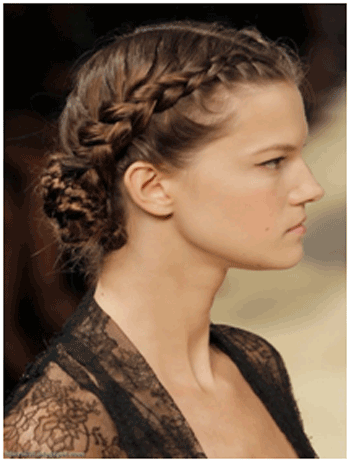
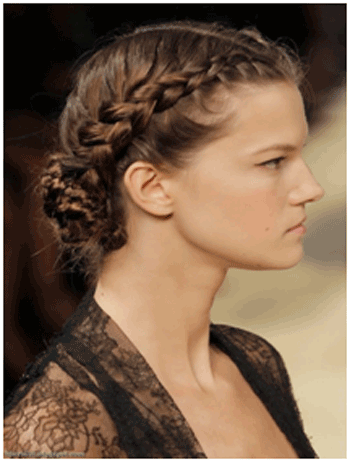
- Braids are not only common, but also very easy to do. You just need to know the knack of how to play your fingers around the hair. French braid is the most classic and modern form. It starts from the top of the head and can end wherever you wish for it to. An interesting mashup of a high bun, with French braid at the back of the head, was seen this season. A simple braid for long hair is also nice and goes well with your casual attire. If you are going out in the afternoon wearing jeans and a T-shirt, do your hair into a simple braid. You can make this braid on the side of your head too, just for the sake of uniqueness. Fishtail braid is also the new trend this year.
- Twisters also look good and smooth. Using Bobby pins, the parted twisters are rolled and pinned to the head on the sides. The remaining hair can either be made into a bun or a braid. This way all the hair are wrapped into a fashionable style and there is no need to use any kind of electronic iron on the hair. This suits all kinds of hair. If your hair is naturally straight, you can leave the rest of them open as well.
- For long waist length hair, tie them up in a pony tail and keep putting more bands on the remaining length of the hair with equal gaps. These bands can be of different colors to create a cheerful look. Bands with tiny flowers on them also look beautiful and charming.
- Finger coils are the traditional twists. They are done using a good hair moisturizer and tactful fingers. Simply hold some portion of parted hair and twist and coil it using your fingers. You can leave the coils open or pin them up nicely into a soft bun. This particular hair style originated in the native African tribes, but has traveled through centuries and now, people around the world just love this look. It can stay on your hair for quite a long time as well unlike other hair styles.
Just make sure whichever style you do for your hair, it should match your overall look. The most popular trends this year include loose messy looks. If you are going with braids or a bun, don’t just give it a sleek look by stretching and pulling the hair and applying lots of hair gel.just let your hair go loose. The braids also look better when they are not done tightly. This way least amount or literally no amount of hair products are required.
Choosing the Right Protective Style for Your Texture
Not every protective style flatters every curl pattern, so match the technique to your hair's density and strand thickness. Loose, fine natural hair holds styles like twist-outs and halo braids well because they reduce manipulation without adding too much weight. Thicker, coily textures can support box braids, cornrows, and flat twists, but the sections should be sized so the scalp does not feel pulled after installation. High-tension styles may look neat at first, yet they often cause traction stress along the hairline and crown. When in doubt, test the style for one day: if you feel a constant ache, it is too tight and should be loosened or redone.
Nighttime Care for Protective Styles
How you sleep directly affects how long a protective style lasts. Cover your hair with a silk or satin bonnet, or switch to a satin pillowcase, to reduce friction that lifts cuticles and creates frizz. Cotton pillowcases absorb moisture and roughen the strand surface, which is especially costly for ends that are already tucked away. For longer styles, gently gather the hair into a loose pineapple or wrap the length before covering it. If your edges are exposed, lightly smooth them with a tiny amount of oil instead of gel to avoid buildup.
How Long to Keep a Protective Style In
Leaving a style in too long can turn protection into damage. Two to six weeks is the usual window, depending on how quickly your scalp produces natural oils and how much new growth appears. Watch for itching, flaking, or noticeable product buildup at the roots, all signs that it is time to take the style down. When removing braids or twists, work slowly from the ends upward and detangle each section with conditioner before shampooing. Rushing the take-down process causes knots and breakage, undoing the benefit the style was meant to provide.
Moisture Underneath the Style
Protective styles only protect if the hair beneath stays hydrated. Mist the scalp and length lightly with water or a water-based leave-in every few days, then seal with a light oil such as jojoba or grapeseed. Avoid heavy butters near the roots if you are prone to buildup; instead, focus conditioner on the mid-lengths and ends. Pay attention to how your hair responds after the first wash: if it feels dry or brittle, increase the water content and reduce heavy styling products. Healthy retention comes from moisture, not just tucking the ends away.
For related advice, see [Best Hairstyles for Every Hair Type](/best-hairstyles-for-every-hair-type), [Causes of Hair Loss in Women](/causes-of-hair-loss-in-women) and [Coconut Oil Hair Treatment](/coconut-oil-hair-treatment).
Hair care specialists and dermatologists commonly recommend protective styling as a way to reduce mechanical breakage, especially for coily and tightly curled textures that are more fragile when dry. They emphasize that the style should never cause pain, scalp bumps, or thinning at the hairline, since those are early signs of traction-related stress. Professionals also advise balancing protective styles with regular cleansing, conditioning, and periods of loose hair to maintain overall scalp and strand health.
Conclusion
Protective styles for natural hair work best when they combine low manipulation with consistent moisture and gentle handling. Choosing a style that suits your texture, keeping it in for a reasonable time, and caring for it at night will help your hair stay strong while it grows. The goal is not perfection or a tight finish; it is giving your strands a break from daily styling stress.
Whether you prefer braids, buns, twists, or finger coils, the same principles apply: start on clean, conditioned hair, avoid tension at the roots, and remove the style carefully. With that approach, protective styling becomes a reliable part of a healthy natural hair routine.
Frequently Asked Questions
Last updated
This article is for informational purposes only and does not constitute medical advice. Consult a licensed dermatologist or healthcare provider before starting any new treatment.
Beauty & Hair Care Editor
Amanda Gurton is a beauty editor and researcher with a focus on translating dermatology and trichology insights into clear, actionable advice. She covers skincare routines, hair health, ingredient science, and everyday beauty habits.
Comments (0)
Be the first to comment.
Related Articles
Silicone-Free Haircare: What It Means and Who Needs It
Learn what silicone-free haircare means, why some people avoid silicones, and whether switching is right for your hair type.
Scalp Microbiome and Hair Health: What the Research Shows
Learn how the scalp microbiome affects hair health, dandruff, and hair loss, and how to support a balanced scalp ecosystem.
Scalp Buildup: Signs You Have It and How to Remove It
Learn the signs of scalp buildup, what causes it, and effective methods to safely remove product and oil buildup from your scalp.
Protective Hairstyles That Prevent Heat and Manipulation Damage
Discover protective hairstyles that reduce heat and manipulation damage, plus tips for maintaining hair health while wearing them.